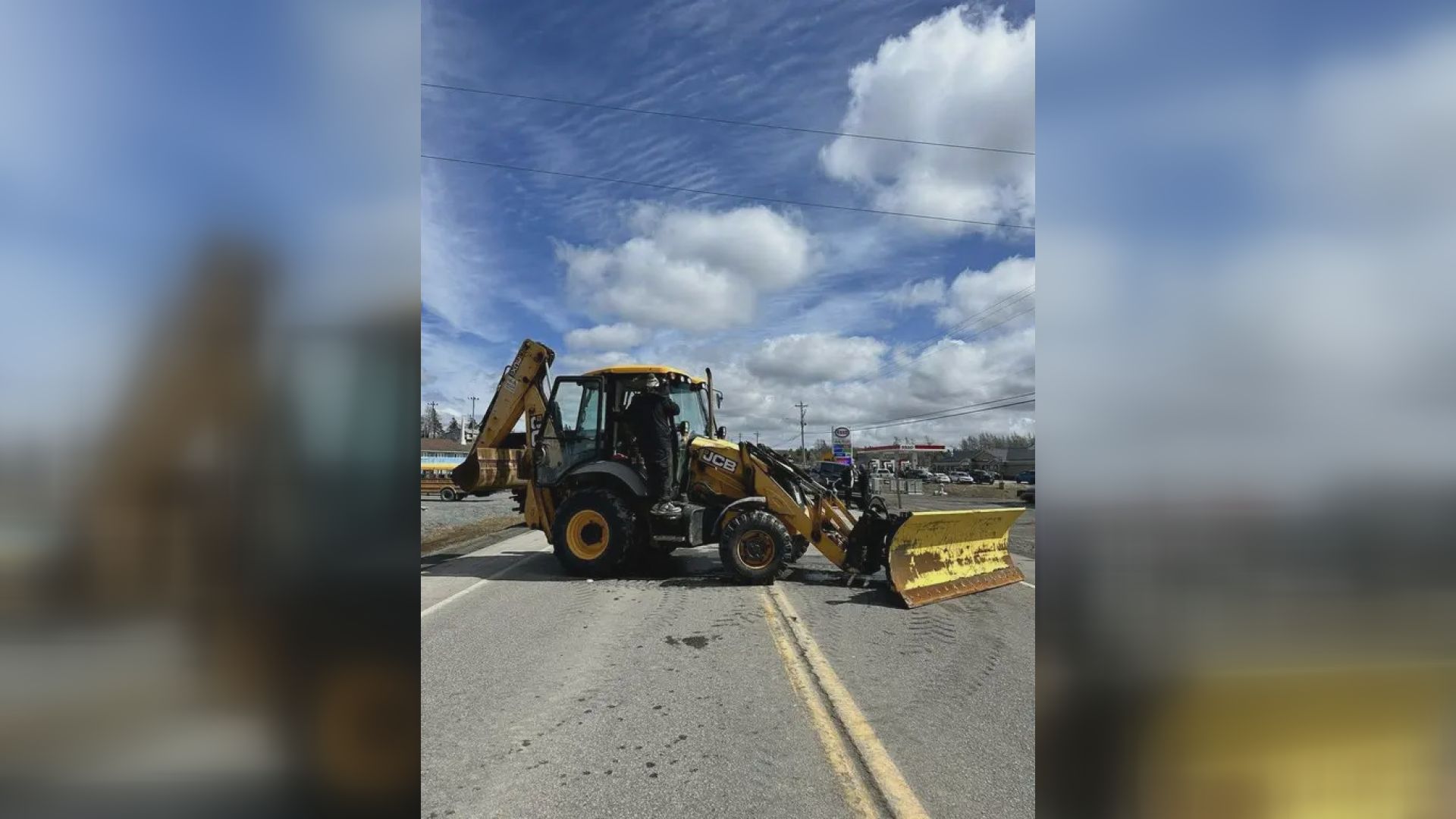
The recent blockade of the Trans-Canada Highway at the Nova Scotia-New Brunswick border represents more than a localized traffic headache. It is a fundamental breakdown in the mechanism of Canadian federalism. When Premier Tim Houston labeled these protests "unacceptable," he wasn't just venting frustration over delayed logistics or frustrated commuters. He was drawing a line in the sand regarding the state’s monopoly on critical infrastructure. But the anger radiating from the Mi’kmaq protesters suggests that the "unacceptable" label is being applied to the wrong side of the barricade.
At the heart of the friction is the Sipekne’katik First Nation and their long-standing assertion of treaty rights, specifically regarding moderate livelihood fishing and land stewardship. The provincial government views a highway as a neutral artery of commerce. To the protesters, that same strip of asphalt is a pressure point—the only tool left in a toolbox that has been emptied by decades of legal stalemates and ignored court rulings.
The Economic Cost of Political Inertia
Provincial leaders often lean on the economic argument to delegitimize direct action. It is an easy win with the voting public. When the flow of goods stops, costs rise. Supply chains, already brittle from global pressures, cannot easily absorb a total halt at the Amherst border. This specific stretch of highway sees thousands of trucks daily, carrying everything from perishable food to industrial components.
The Premier’s rhetoric focuses on the "law-abiding" citizen. By framing the blockade as an affront to the general public, the government shifts the narrative away from the underlying constitutional failure. This is a classic diversion. If the state had fulfilled its obligations under the 1752 Treaty of Peace and Friendship or the 1999 Marshall Decision, the physical necessity for a blockade would likely vanish. Instead, the province treats the symptom—the protest—as the primary disease.
The Logistics of a Standoff
Logistically, the border at Amherst is a geographic bottleneck. There are no easy detours. A closure there effectively severs the Atlantic provinces from the rest of the Canadian landmass. This gives a relatively small group of protesters immense leverage over the regional economy.
- Perishable Goods: Grocers in Newfoundland and Nova Scotia operate on "just-in-time" delivery models. A 24-hour delay results in immediate shelf shortages.
- Medical Supplies: Radio-pharmaceuticals and other time-sensitive medical components rely on road transport to reach regional hospitals.
- Fuel Security: While much of the region’s fuel arrives by sea, the distribution to inland stations is entirely dependent on the highway network.
The government's reaction is predictable because the stakes are high. However, the move to condemn the tactics without addressing the cause ensures that this cycle will repeat. A permanent injunction might clear the road today, but it does nothing to clear the resentment that fueled the fire in the first place.
Sovereignty Versus Statutory Law
The legal conflict here is not about traffic bylaws. It is a clash between two different interpretations of law. The Nova Scotia government operates under the assumption that provincial and federal statutes are the supreme law of the land. The Mi’kmaq leadership points to the fact that they never ceded their territory.
This is the "why" that most news reports gloss over. When a Premier calls a protest unacceptable, they are asserting that the province's right to manage its infrastructure supersedes the Indigenous right to self-determination. This is a shaky legal foundation. The Supreme Court of Canada has repeatedly affirmed that Aboriginal title is a real, tangible burden on the Crown’s sovereignty.
The Failure of Consultation
The "duty to consult" has become a bureaucratic checkbox rather than a meaningful exchange of power. In many instances, the province provides "notice" of an action and calls it consultation. When First Nations dissent, the project moves forward anyway.
The blockade is a physical manifestation of a "No" that was ignored in a boardroom months or years prior. It is the final stage of a failed communicative process. If the Premier wants to end blockades, the solution isn't more police or harsher statements. It is a restructuring of how the province shares decision-making power over the land itself.
The Radicalization of the Middle Ground
For years, many First Nations leaders sought change through the courts. It is a slow, expensive, and soul-crushing process. The Marshall decision took years to secure, and decades later, its implementation remains a point of violent contention.
Younger generations of Indigenous activists are less patient than their predecessors. They have seen the "legal route" result in endless delays while resources are extracted and lands are developed. The shift toward direct action—blocking highways, disrupting rail lines, or occupying government offices—is a rational response to a system that rewards patience with nothing.
Public Perception and the Media Narrative
Public opinion in Nova Scotia is sharply divided, often along lines of proximity. Those stuck in the traffic jam rarely care about 18th-century treaties. They care about their shift start times and their fuel gauges. The Premier knows this. By using the word "unacceptable," he aligns himself with the frustrated commuter, casting the protester as the "other" who is disrupting "our" way of life.
This framing is dangerous. It ignores the reality that the "way of life" enjoyed by the majority is built upon the systemic exclusion of the minority. The highway is not a neutral space. It is a piece of infrastructure built on unceded land, maintained by a government that continues to struggle with the basic tenets of reconciliation.
The Policing Dilemma
The RCMP finds itself in an impossible position during these events. If they move in too quickly with force, they risk creating a national scandal and a potential flare-up of violence, reminiscent of the 1990 Oka Crisis or the more recent events at Wet’suwet’en. If they wait, they face intense political pressure from the Premier’s office to "do their job."
The "job" in this context is poorly defined. Is it to protect the flow of commerce, or is it to uphold the constitutional rights of the protesters? Often, these two objectives are in direct opposition. The use of injunctions—civil court orders that allow police to arrest anyone interfering with a specific activity—has become the preferred weapon of the state. It allows the government to claim it is simply "enforcing the law" while avoiding the political fallout of a direct executive order to clear the road.
The Precedent of Inaction
There is a growing sentiment among the provincial leadership that allowing blockades to persist, even for a few hours, sets a precedent of lawlessness. They argue that if one group can block a highway to further a political goal, any group can. This "slippery slope" argument fails to recognize the unique constitutional status of First Nations.
A protest over carbon taxes or hospital closures is fundamentally different from a protest over treaty rights. One is a disagreement over policy; the other is a dispute over the very authority of the state to govern a specific piece of land. By lumping them together, the Premier erodes the specific legal standing of Indigenous peoples.
Beyond the Barricades
The focus on the highway itself is a distraction. The real story is the persistent failure of the Crown to negotiate in good faith regarding land and resources. Until that issue is resolved, the highway will remain a target. It is the most visible and vulnerable link in the chain of provincial authority.
The Premier’s condemnation serves his immediate political needs, but it fails the long-term stability of the province. Every time a protest is broken up by force or threat of force, the underlying grievance grows. It doesn't disappear; it just goes underground until the next flashpoint.
We are seeing a shift in how power is negotiated in Canada. The days of the state having the final, unquestioned word on land use are over. The barricades are not just piles of tires and wood; they are a demand for a new kind of partnership—one that the current provincial administration seems unwilling to entertain.
The path forward requires more than just "opening the road." it requires an admission that the current model of provincial-Indigenous relations is broken. If the Premier truly finds the blockades unacceptable, he must address the conditions that make them necessary. Anything less is just noise.
The next time the Trans-Canada grinds to a halt, remember that the frustration of the drivers is only a fraction of the frustration felt by those standing in the middle of the road. One group is late for work; the other is fighting for their existence. The math of "acceptability" changes depending on which side of the line you stand on.
Stop looking at the traffic. Start looking at the land beneath it.