The air in the Kremlin doesn't move. It sits heavy, filtered through centuries of stone and a decade of increasingly narrow options. Across the world, in the heat-shimmer of Tehran, the air is different—thick with the smell of diesel, dust, and the electric tension of a nation that has spent forty years learning how to breathe while being strangled. These two worlds, one freezing and one burning, have finally found a common language. It isn't a language of friendship. It is the language of the cornered.
For months, the global headlines have been obsessed with the "Iran crisis." We see the grainy footage of centrifuges and the stern faces of diplomats in Geneva. But while the West watches the flicker of the nuclear fuse, a much quieter, much more permanent shift is happening under the floorboards of the global economy. Vladimir Putin hasn't just noticed the fire in the Middle East; he has brought a bucket of gasoline and a map of the world's pipelines.
He is betting everything on a bombshell offer that could redefine how energy moves across the planet.
Consider a factory owner in a place like Chelyabinsk. Let’s call him Mikhail. For thirty years, Mikhail’s world was predictable. He made parts, he shipped them, and the gas that powered his furnaces flowed from the vast Siberian permafrost toward the hungry markets of Europe. Then, the world changed. The pipes to the West didn't just close; they became ghosts of a former era. Mikhail’s furnaces didn’t go cold, but the math behind them became terrifying. Russia was sitting on a mountain of energy with no way to get it to the people willing to pay for it.
Then came the Iranian escalation.
In the chaos of shifting alliances, Putin saw a corridor. Not a metaphorical one, but a physical path of steel and asphalt stretching from the Baltic Sea down to the Persian Gulf. By offering Iran a massive, multi-billion-dollar partnership in gas infrastructure and transport, Russia isn't just "helping a neighbor." It is building a bypass around the Western financial system.
It is a play for survival.
The mechanics of the deal are dense, but the human reality is simple. Russia has the gas. Iran has the geography. If Putin can link the Russian energy grid with Iranian pipelines, he creates a southern exit for his country’s primary export. Suddenly, the sanctions that were supposed to starve the Russian economy look less like a cage and more like a hurdle that has already been cleared.
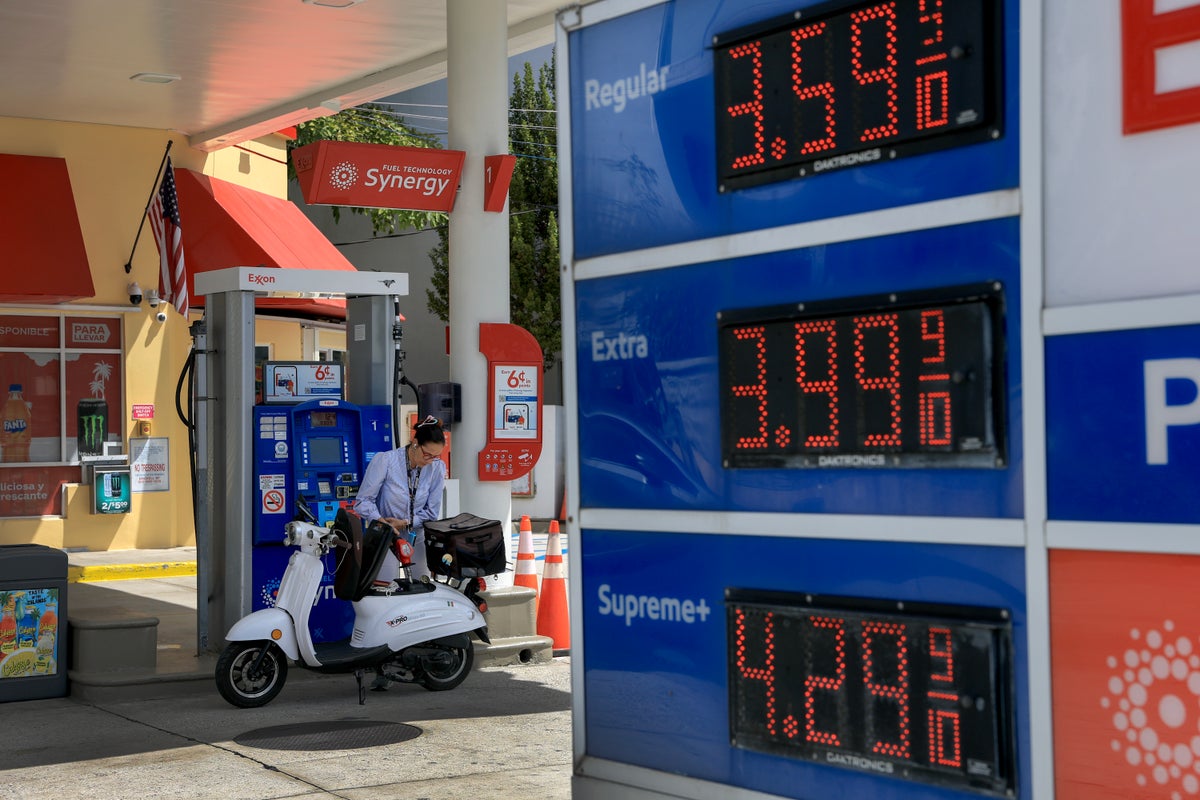
The stakes for the average person in the West are often invisible until they hit the gas pump or the grocery bill. We tend to think of global trade as a series of polite agreements between nations. It isn’t. It’s a brawl. When Russia pivots toward Iran, the "price" of energy stops being a reflection of supply and demand and starts being a reflection of geopolitical spite.
Imagine the sheer scale of the engineering required. We are talking about thousands of miles of pipe being laid through some of the most inhospitable terrain on earth. It requires workers toiling in the biting winds of the Caspian and the suffocating humidity of the Gulf. These workers don’t care about the high-level strategy. They care about the paycheck. But their labor is the physical manifestation of a divorce—the final separation of the East from the Western-led economic order.
This isn't just about money. It’s about the "bombshell" nature of the offer: Russia isn't just selling gas to Iran. It is proposing to manage the entire regional flow.
If this plan succeeds, Russia becomes the central switchboard for energy in Eurasia.
Think about what that means for a moment. For decades, the US Dollar has been the undisputed king because if you wanted to buy oil or gas, you needed Greenbacks. But in this new Moscow-Tehran axis, the dollar is a foreign language no one wants to speak. They are trading in Rubles, in Rials, and in the sheer barter of survival. Every cubic meter of gas that flows through this new corridor is a cubic meter that the Western banking system cannot tax, track, or touch.
The tragedy of this shift is often lost in the talk of "macroeconomics." The tragedy is the fragmentation of the world. We are moving away from a global village and toward a series of fortified camps. In one camp, you have the traditional powers trying to maintain a status quo that served them well for eighty years. In the other, you have the "outsiders" building their own infrastructure, their own banks, and their own future.
But there is a flaw in the plan, one that neither Putin nor the Ayatollahs like to discuss in public.
Trust.
Trust is a rare commodity in the world of high-stakes energy. Russia and Iran are not natural allies; they are competitors. Both want to be the primary supplier to the rising markets of India and China. Right now, they are huddled together because the wind is blowing hard against both of them. But what happens when the wind dies down?
I remember talking to a veteran energy analyst who had spent forty years tracking the movement of oil across the Middle East. He looked at the maps of the proposed Russia-Iran corridor and sighed. He didn't see a "bombshell" deal. He saw a marriage of convenience where both partners were keeping their suitcases packed by the door.
"The problem with building a pipe to save your life," he told me, "is that the person on the other end of the pipe knows exactly how much your life is worth to them."
Russia’s economy is currently a machine running on adrenaline and redirected exports. The "bombshell" offer to Iran is an attempt to turn that adrenaline into a sustainable heartbeat. Putin needs this. He needs it to keep the factories in Chelyabinsk running. He needs it to ensure that the ruble in a Russian pensioner’s pocket still buys bread. He needs it to prove that the world is bigger than the North Atlantic.
The cost, however, is a deeper entanglement in a region that is currently a powder keg. By tying Russia’s economic salvation to the stability of the Iranian regime, Putin is tethering his country’s future to one of the most volatile geopolitical fault lines on earth. If the "Iran crisis" boils over into a full-scale regional war, the pipelines become targets. The multibillion-dollar investment becomes scrap metal in the sand.
We are watching a high-wire act performed without a net.
On one side, there is the hope of a "Greater Eurasia," a contiguous economic zone where goods flow freely from St. Petersburg to Mumbai. It’s a vision of a world where the West is a peripheral player, a lonely island on the edge of a massive, interconnected continent. It’s a vision that appeals to the pride of a nation that feels it has been unfairly cast out.
On the other side is the reality of the desert.
The heat in Tehran is relentless. It cracks the ground and wears down the spirit. In the offices where these deals are signed, the air conditioning hums, a thin barrier against the harshness outside. The men signing the papers know that the ink isn't even dry before the next crisis begins. They are gambling with the resources of their children and the stability of the global map, all to win a game that has no real ending.
The Russian economy isn't being "saved" in a vacuum. It is being transformed into something unrecognizable. It is becoming a wartime economy that functions on the margins, a scavenger that has learned to find calories in places no one else will look. This isn't a sign of strength, no matter how much the state media broadcasts the "victory" of the deal. It is a sign of a fundamental shift in the human story—the moment we realized that the global economy could actually break apart.
Next time you see a headline about a "bombshell offer" or a "strategic partnership," don't look at the numbers. Look at the geography. Look at the miles of pipe and the ships waiting in the harbor. Look at the people like Mikhail, who just want to know if their work will still matter in five years.
The real story isn't the deal itself. It’s the desperation that made the deal necessary.
As the sun sets over the Caspian Sea, the water turns a deep, bruised purple. Somewhere beneath that surface, or perhaps along its rugged shores, the new lines of the world are being drawn. They are lines of steel, lines of fire, and lines of debt. They are being drawn by men who have decided that it is better to burn the old map than to admit they are lost.
The fire is already lit, and the smoke is starting to drift across the borders.