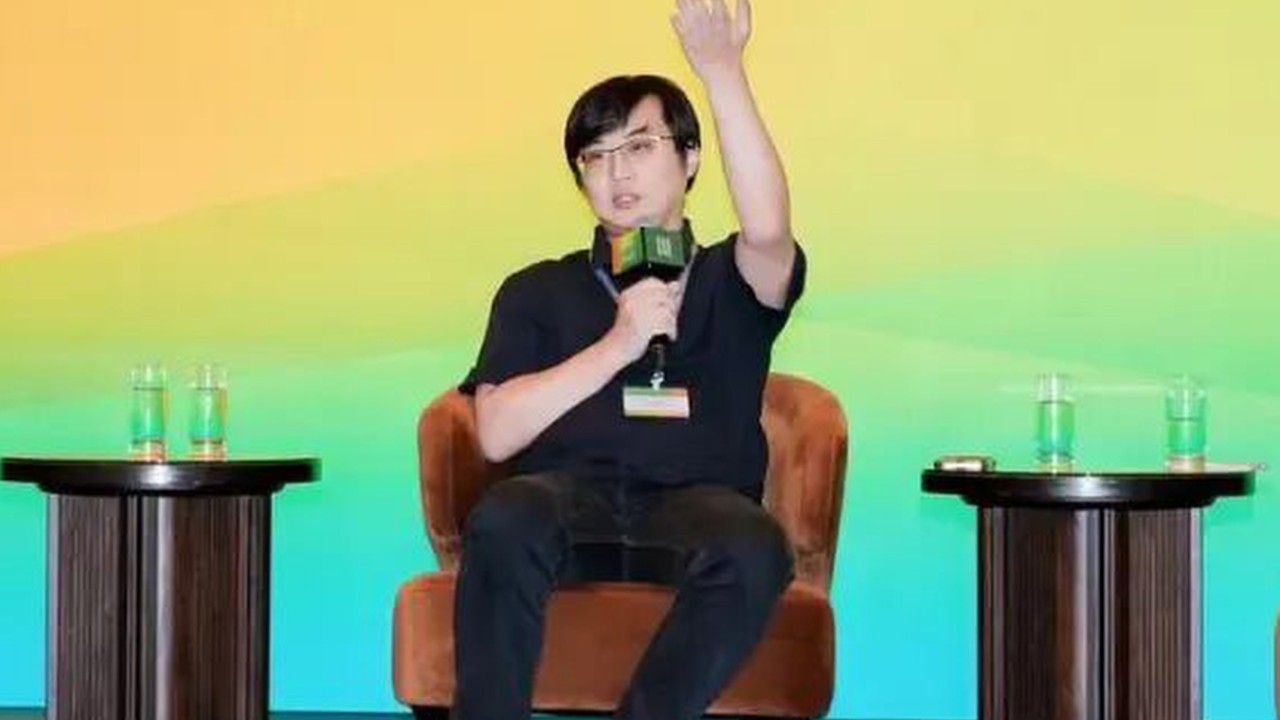
The hand-wringing over elite AI scholars moving between Washington and Beijing is a performance for people who don’t understand how code actually scales. We are currently obsessed with the "brain drain" narrative—the idea that if a top-tier robotics professor leaves a tenured track at Carnegie Mellon or Stanford to head a lab in Shenzhen, the West loses its edge.
This is a fundamental misunderstanding of the current technological epoch.
Knowledge is no longer a localized resource stored in the gray matter of a few high-priced academics. We are in the era of compute-heavy, data-rich execution. The obsession with individual "superstars" is a relic of the 20th-century Manhattan Project mentality. In the modern AI race, the individual is a rounding error. The infrastructure is the product.
The Myth of the Proprietary Genius
The competitor narrative suggests that a single scholar joining China’s tech pool is a seismic shift in the balance of power. This assumes that AI breakthroughs happen in a vacuum, locked inside a single human brain.
It ignores the reality of open-source dominance.
The most significant advancements in robotics and machine learning over the last five years didn't stay behind closed doors. They were published on arXiv. They were debated on X. They were implemented in PyTorch and JAX by developers who never stepped foot in an Ivy League classroom. When a top scholar moves, they aren't taking a "secret formula" with them. They are taking a set of methodologies that are already being replicated by thousands of engineers globally.
If you think one person—no matter how many citations they have—determines the trajectory of a nation's robotics program, you haven't been paying attention to the industrialization of AI.
The Talent Trap: Why Tenured Stars Often Fail in Industry
I have watched venture capital firms and government agencies incinerate hundreds of millions of dollars chasing "big name" academics. The assumption is that a brilliant researcher equals a brilliant product lead.
It is almost never true.
Academic research prioritizes the novelty of a solution. Industry prioritizes the reliability and scalability of a solution. These two goals are diametrically opposed. A scholar who has spent twenty years chasing a 2% improvement in a niche reinforcement learning paper is often ill-equipped to handle the brutal, unglamorous work of hardware-software integration required for real-world robotics.
China isn't winning because they are "stealing" our professors. They are winning because they have a manufacturing ecosystem that allows for rapid iteration of physical hardware. A scholar moving from Pittsburgh to Beijing isn't the threat; the threat is the fact that Beijing can prototype a new robotic chassis in forty-eight hours while a US startup is still waiting for a custom part to clear customs.
Stop Asking if They Leave—Ask Why They Can't Build Here
The "People Also Ask" sections of the internet are filled with variations of: "How do we stop AI talent from leaving?"
It’s the wrong question. The premise is flawed. You don't "stop" talent in a globalized, digital economy. You make the local environment so productive that leaving feels like a career suicide.
Currently, the US academic-industrial complex is choked by:
- Grant-seeking paralysis: Researchers spend 40% of their time begging for money instead of building.
- Compute poverty: Unless you are at a handful of tech giants, you don't have the H100 clusters needed to do state-of-the-art work.
- Regulatory friction: We are more interested in debating the ethics of a robot that doesn't exist yet than we are in building the one that can fix our crumbling infrastructure.
When a scholar leaves for a Chinese lab, they aren't necessarily chasing a flag. They are chasing the ability to work without friction. If we want to "keep" talent, we need to stop treating AI like a sensitive government secret and start treating it like the industrial utility it is.
The Counter-Intuitive Truth About "Brain Drain"
Exporting expensive academics might actually be a net positive for the US.
Hear me out.
When a high-profile researcher moves to a foreign competitor, they bring with them Western methodologies, Western expectations of openness, and a deep-seated reliance on Western-developed software stacks. They become an unintentional vector for American soft power.
Furthermore, the "brain drain" creates vacancies. The bottleneck in AI isn't a lack of geniuses at the top; it's the stagnation of the middle tier. By clearing out the "old guard" who have held the same chairs for thirty years, you allow for a more aggressive, hungrier generation of researchers to take the wheel. These are the people who will actually build the next generation of LLMs and autonomous systems because they aren't protective of a legacy.
The Compute-Data Hegemony
Let’s talk about $\text{Effective Intelligence}$.
In the current paradigm, intelligence is a function of:
$$EI = \alpha(C \cdot D) + \beta(H)$$
Where:
- $C$ is Compute power (FLOPs).
- $D$ is Data quality and volume.
- $H$ is Human capital.
The dirty secret of the industry is that $ \beta $—the human element—is shrinking every year. As our models become better at self-critique and synthetic data generation, the requirement for a "super-genius" to nudge the weights becomes less critical.
China’s advantage isn't the professor they just hired. It’s the fact that they have a centralized data strategy and a massive, state-subsidized compute infrastructure. If you give a mediocre engineer 100,000 GPUs and a massive dataset, they will outperform a Nobel laureate with a laptop every single time.
The Security Theater of Talent Retention
Politicians love to talk about "preventing talent leaks" because it sounds proactive. It’s easier to target a person than it is to fix a broken supply chain.
We see this in the way export controls are handled. We focus on the "who" instead of the "what." We worry about a scholar teaching a seminar in Tsinghua while ignoring the fact that the underlying hardware they use is often manufactured in the same province.
This is security theater.
If we truly wanted to dominate the robotics sector, we wouldn't care where the professors go. We would focus on making sure that every piece of high-end silicon on the planet is tied to a Western software ecosystem that we control. We don't need to own the players; we need to own the stadium.
The Hard Reality of the "Talent War"
There is a cost to this contrarian view. If you stop worshiping the "superstar" scholar, you lose the prestige that attracts international students. You risk becoming a purely industrial power rather than an intellectual one.
But prestige doesn't win wars, and it doesn't build trillion-dollar industries.
The US has spent decades as the world's university. We have trained the world's elite. If they choose to go home and try to replicate our success, it’s a sign that our model works. The danger isn't that they leave; the danger is that we stop innovating because we're too busy trying to gatekeep the people who already know our secrets.
Stop Protecting the Past
The competitor's article is rooted in a fear of loss. It’s a defensive posture.
"How do we keep what we have?"
That is the question of a declining power. An ascending power asks: "How do we build the next thing so fast that it doesn't matter who has the old thing?"
If a top robotics scholar wants to go to China, let them. Let them deal with the bureaucratic overhead of a state-monitored lab. Let them navigate the shift from open collaboration to siloed nationalist research. Meanwhile, we should be funding the twenty-something dropouts who are building autonomous swarms in their garages using leaked weights and off-the-shelf components.
The next leap in AI won't come from a celebrated professor switching jerseys. It will come from the organization that can process the most data with the least amount of human ego involved.
Build the machines. Forget the stars.