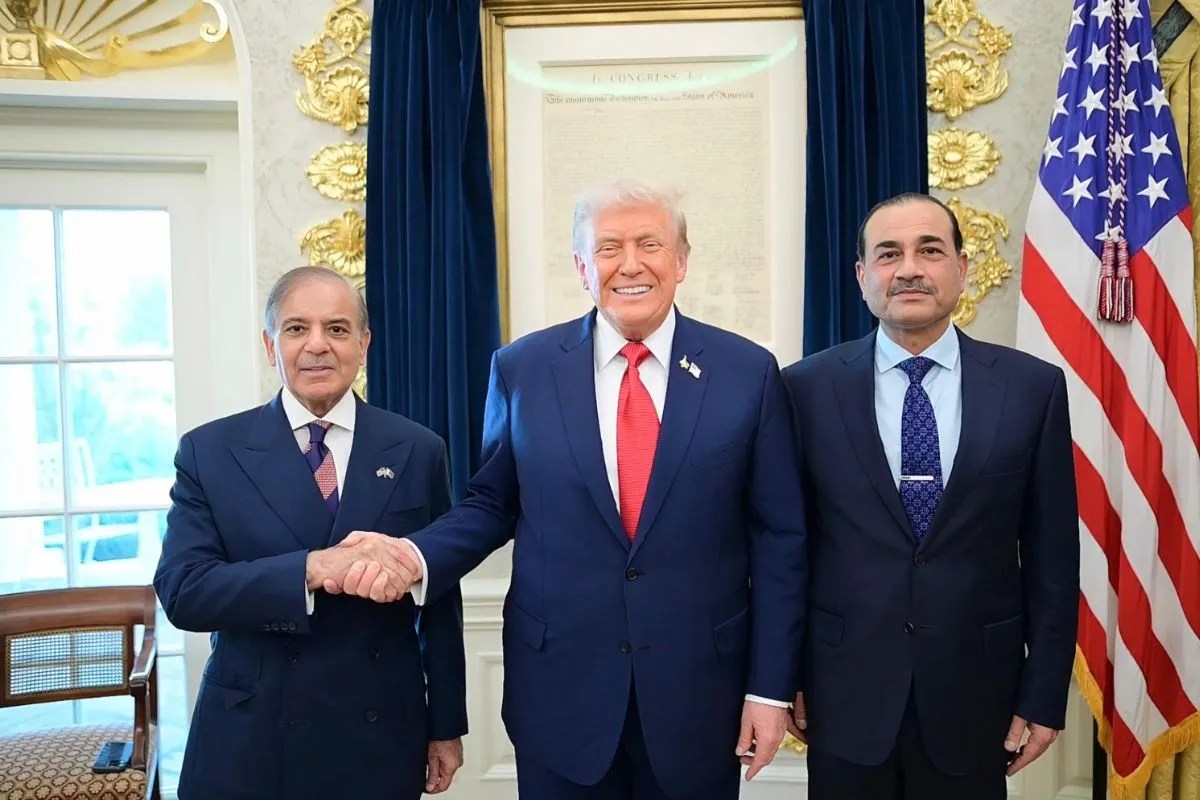
The diplomatic circuit recently caught a tremor that few saw coming but many should have predicted. Donald Trump, back in the White House with a mandate that has sent shockwaves from Brussels to Beijing, recently described Pakistani Prime Minister Shehbaz Sharif as a "good man." To the casual observer or the headline-skimmer, this looks like a standard exchange of pleasantries between two heads of state. To those who have spent decades tracking the volatile, often transactional nature of U.S.-Pakistan relations, it is a calculated opening gambit in a high-stakes geopolitical chess match.
Trump’s endorsement of Sharif isn’t about personal affection or a sudden shift in his "America First" skepticism toward foreign aid. It is a pragmatic pivot. By labeling Sharif a "noble" or "good" person, Trump is effectively resetting a relationship that he himself nearly torched during his first term when he famously accused Islamabad of giving the U.S. "nothing but lies and deceit." This sudden warmth serves a specific purpose: securing a reliable partner for regional counter-terrorism and creating a counterweight to growing Iranian and Chinese influence in South Asia.
The Mechanics of Transactional Diplomacy
Foreign policy under a second Trump administration operates less on ideological alignment and more on the "art of the deal." When Trump praises a leader like Shehbaz Sharif, he is signaling that the door is open for business, provided Pakistan meets specific American requirements. The primary requirement remains unchanged since 2001: stability in a neighborhood where instability is the only constant.
Pakistan is currently grappling with a suffocating economic crisis and a resurgence of internal security threats. Sharif needs Washington to facilitate IMF lifelines and provide a veneer of international legitimacy for his coalition government. Trump knows this. By offering public praise, he grants Sharif domestic political capital. In exchange, the U.S. expects Pakistan to tighten its grip on cross-border militancy and, perhaps more importantly, remain a neutral ground as the U.S. ramps up its "maximum pressure" campaign on Tehran.
The optics of this relationship are particularly sensitive given Pakistan’s deep ties with China. For years, Islamabad has attempted a delicate balancing act, maintaining the China-Pakistan Economic Corridor (CPEC) while begging for U.S. security assistance. Trump’s outreach suggests he believes he can pull Pakistan back toward the American orbit—or at least ensure they don't become a total satellite state for Beijing.
Why the Noble Man Label Matters
Language in diplomacy is rarely accidental. By calling Sharif a "good man," Trump is utilizing a psychological tactic he has used with everyone from Kim Jong Un to Vladimir Putin. It creates a personal obligation. It shifts the narrative from "state-to-state friction" to "leader-to-leader rapport."
Sharif, for his part, has been desperate for this validation. His government faces a significant challenge from the populist movement led by the imprisoned Imran Khan. Khan’s narrative is built on anti-American sentiment and the claim that the current administration is a puppet of foreign powers. When Trump—a figure Khan previously claimed to have a "great chemistry" with—pivots his favor to Sharif, it undercuts Khan’s monopoly on the "strongman" connection. It tells the Pakistani public that Sharif is the one who can actually manage the unpredictable giant in Washington.
The Afghan Factor and the Shadow of the Taliban
We cannot discuss U.S.-Pakistan relations without looking at the vacuum left in Afghanistan. The 2021 withdrawal left a scar on American foreign policy that Trump intends to "fix," or at least manage differently. Pakistan remains the only viable geographic and intelligence conduit into the Taliban-controlled territory.
If Trump wants to ensure that Afghanistan does not become a launchpad for global terror once again, he needs the Pakistani military and intelligence apparatus (the ISI) on his side. The praise for Sharif is a down payment on that cooperation. It is a recognition that while the U.S. might not love the partner, it cannot afford the alternative.
The Economic Leverage
The Pakistani economy is on life support. Inflation has gutted the middle class, and the country’s debt-to-GDP ratio is a flashing red light on the dashboard of global finance. Trump’s administration understands that economic desperation makes a nation malleable.
The U.S. remains Pakistan's largest export destination. By dangling the carrot of better trade terms or support at the World Bank, Trump ensures that Sharif remains attentive. However, this is a double-edged sword. If Sharif fails to deliver on security guarantees or moves too close to Iran’s energy projects, the "good man" label will vanish as quickly as it appeared, replaced by the same scorched-earth rhetoric that defined the 2018 era.
Counter-Arguments and the Risk of Backlash
Critics argue that Trump’s praise ignores the human rights situation and the democratic backsliding within Pakistan. There is a legitimate concern that by emboldening Sharif, the U.S. is signaling that it cares more about regional utility than the democratic process. This isn't a new criticism of American policy, but under Trump, the pretense of "promoting democracy" is often stripped away entirely in favor of raw realism.
Furthermore, there is the risk of India’s reaction. New Delhi has become Washington's primary strategic partner in the Indo-Pacific. Any perceived "thaw" in U.S.-Pakistan relations is viewed with extreme suspicion by the Modi government. Trump must walk a tightrope here. He needs to keep Pakistan functional enough to manage the border but not so empowered that it threatens the stability he has built with India.
The Realist Perspective
This isn't a story about a burgeoning friendship. It is a story about the cold, hard realities of power. Trump’s rhetoric is a tool, not a testimonial. He is testing Sharif’s willingness to act as a regional deputy. For Sharif, the praise is a shield against domestic critics and a signal to the markets that Pakistan isn't a pariah state.
The coming months will reveal the true price of this "noble" designation. Watch for movement on intelligence sharing, the stalling of the Iran-Pakistan gas pipeline, and the specific language used by the State Department regarding Pakistan’s debt restructuring. These are the real metrics of success.
You can look at the handshake, but you must watch the hands. Trump has made his move; now the world waits to see how Islamabad settles the bill.
Would you like me to analyze the specific trade data between the U.S. and Pakistan during the previous Trump administration to see how this rhetoric translated into policy?

/200199910-001-58b9cf5c5f9b58af5ca83533.jpg)