Donald Trump just signaled the end of the traditional Atlantic alliance, choosing the gold-plated halls of a Saudi-backed investment summit to declare that the United States no longer feels obligated to defend its NATO allies. This isn't just another rhetorical flare-up. It is a calculated pivot toward a transactional "Coalition of the Billions," where military protection is a commodity sold to the highest bidder rather than a treaty-bound duty. In the first four weeks of a grinding conflict with Iran, the President has found more reliable support in Riyadh than in Brussels, and he is now making the world pay for that shift in real-time.
The Miami Betrayal
While the Future Investment Initiative (FII) in Miami was intended to showcase "Capital in Motion," it instead provided the stage for a geopolitical autopsy. Trump’s remarks were aimed directly at European leaders who have refused to provide material support for the ongoing American-led operations against Tehran. His logic is simple: if you don’t pay or play, you don’t stay under the umbrella. Read more on a related subject: this related article.
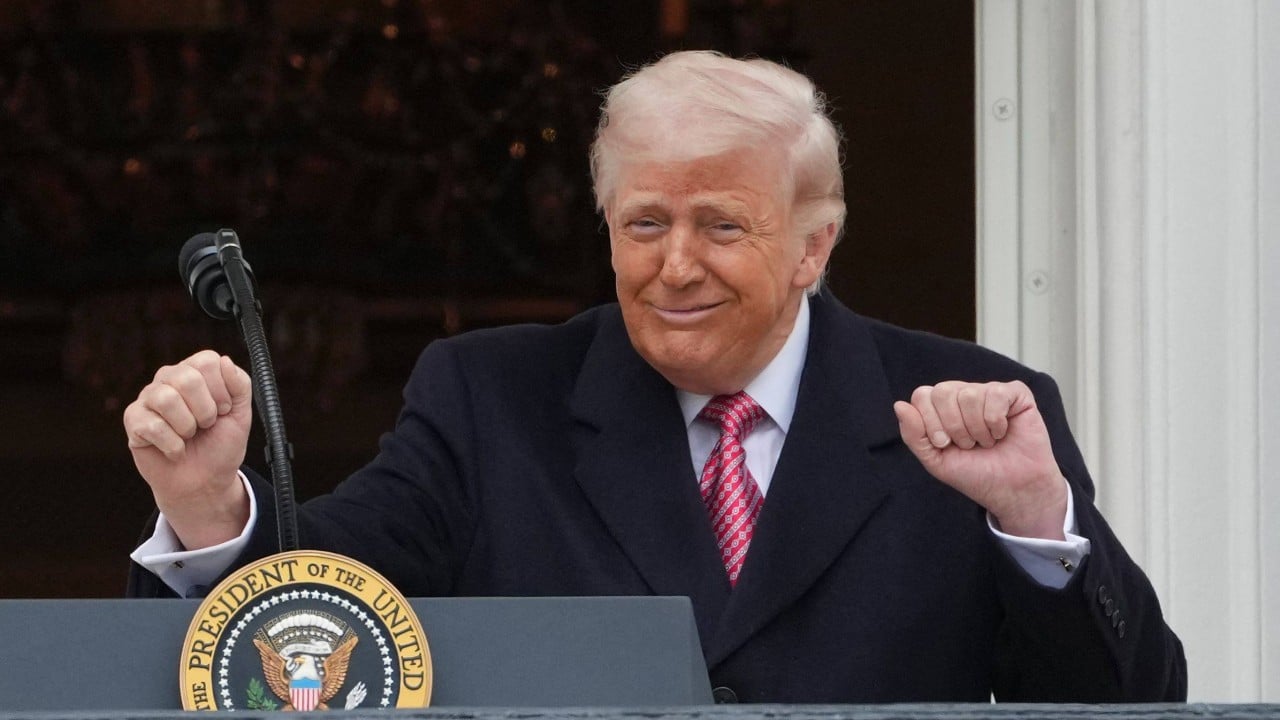
"We would have always been there for them," Trump told the crowd of sovereign wealth fund managers and tech CEOs. "But now, based on their actions, I guess we don’t have to be, do we?"
This isn't just about "fair share" anymore. It is about active participation in a war that most of Europe views as a strategic disaster. By contrast, Saudi Arabia is not only providing intelligence but has reportedly been the loudest voice urging Washington to maintain its strikes on Iranian infrastructure. The result is a White House that views Riyadh as a "major non-NATO ally"—a title recently bestowed upon the Kingdom—while treating Berlin and Paris like deadbeat tenants. Further analysis by Reuters Business highlights similar views on the subject.
The Trillion Dollar Shield
The shift is grounded in a staggering financial reality. During his visit to the Kingdom and subsequent forums, Trump has touted a joint investment plan with Crown Prince Mohammed bin Salman (MBS) that has ballooned to nearly $1 trillion. This includes:
- $142 billion in immediate American-made military equipment purchases.
- A $500 billion investment pledge from tech giants like Nvidia and Apple into U.S.-based infrastructure, partially fueled by Saudi capital.
- The deployment of 35,000 advanced AI chips to the Kingdom, positioning Riyadh as a primary hub for global model training.
This is the "Peace through Strength" model updated for 2026. In this version, "Strength" is measured by foreign direct investment and "Peace" is a subscription service. The Strategic Defense Agreement signed with Saudi Arabia doesn't just expand military access; it formalizes a burden-sharing commitment where the Kingdom defrays the costs of U.S. deployments. It is the most honest the American empire has ever been about its price tag.
NATO and the Greenland Fracture
The frost between Washington and NATO hasn't just been caused by the Iran conflict. The bizarre, persistent tension over the status of Greenland has turned a peripheral curiosity into a genuine alliance-breaker. When Trump ramped up threats to annex the territory in early 2026, he wasn't just looking for real estate; he was testing the sovereignty of a NATO member, Denmark.
The European refusal to entertain the Greenland purchase—or to back the U.S. in the Persian Gulf—has convinced this administration that the 77-year-old alliance is a liability. While the U.S. military remains the most lethal force on the planet, the President now views it as an "awfully big waste of money" to protect nations that won't help him open up what he calls the "Strait of Trump" (formerly the Strait of Hormuz).
The High Tech Ransom
Perhaps the most overlooked factor in this reordering is the Silicon Valley connection. The Miami summit wasn't just for oil sheiks; it was a gathering of the new American industrial complex. Companies like Oracle, AMD, and Amazon are signing multibillion-dollar commercial deals that are inextricably linked to the administration’s foreign policy.
The Saudi AI memorandum is the centerpiece. By granting the Kingdom access to leading-edge chips, the U.S. is essentially creating a technological dependency that mirrors the old oil dependency, just in reverse. The risk is immense. Critics point out that the Kingdom cannot afford a $1 trillion investment in the U.S. without gutting its own domestic Vision 2030 projects. Yet, for Trump, the "soundbite" of a trillion dollars is more valuable than the long-term feasibility of the deal. He wants the jobs and the factory construction now, regardless of whether the Saudi Public Investment Fund can actually deliver on those numbers without oil prices at $150 a barrel.
The Dead End of Liberal Internationalism
We are witnessing the final rejection of the idea that America should export its political system. Trump’s praise for the "Arabian way" of development is a direct rebuke to decades of neoconservative and liberal interventionism. He told the forum that the "so-called nation-builders" wrecked more than they built. In his view, the gleaming towers of Riyadh are proof that sovereignty and national tradition trump democratic reform every time.
This worldview has created a vacuum that China and Russia are eager to fill, but Trump seems unconcerned. His recent breakthrough trade agreements with London and Beijing suggest he believes he can manage global rivals through bilateral deals while leaving the "complex societies" of the world to fend for themselves.
The war in Iran is the ultimate test of this theory. As consumer sentiment in the U.S. plummets due to the conflict's economic shock, Trump is doubling down on the allies who are actually writing checks. The message to Europe is clear: the umbrella is folding, and if you want to stay dry, you’d better start bidding.
Would you like me to analyze the specific breakdown of the $1 trillion Saudi-U.S. investment framework to see which American sectors are actually receiving the capital?