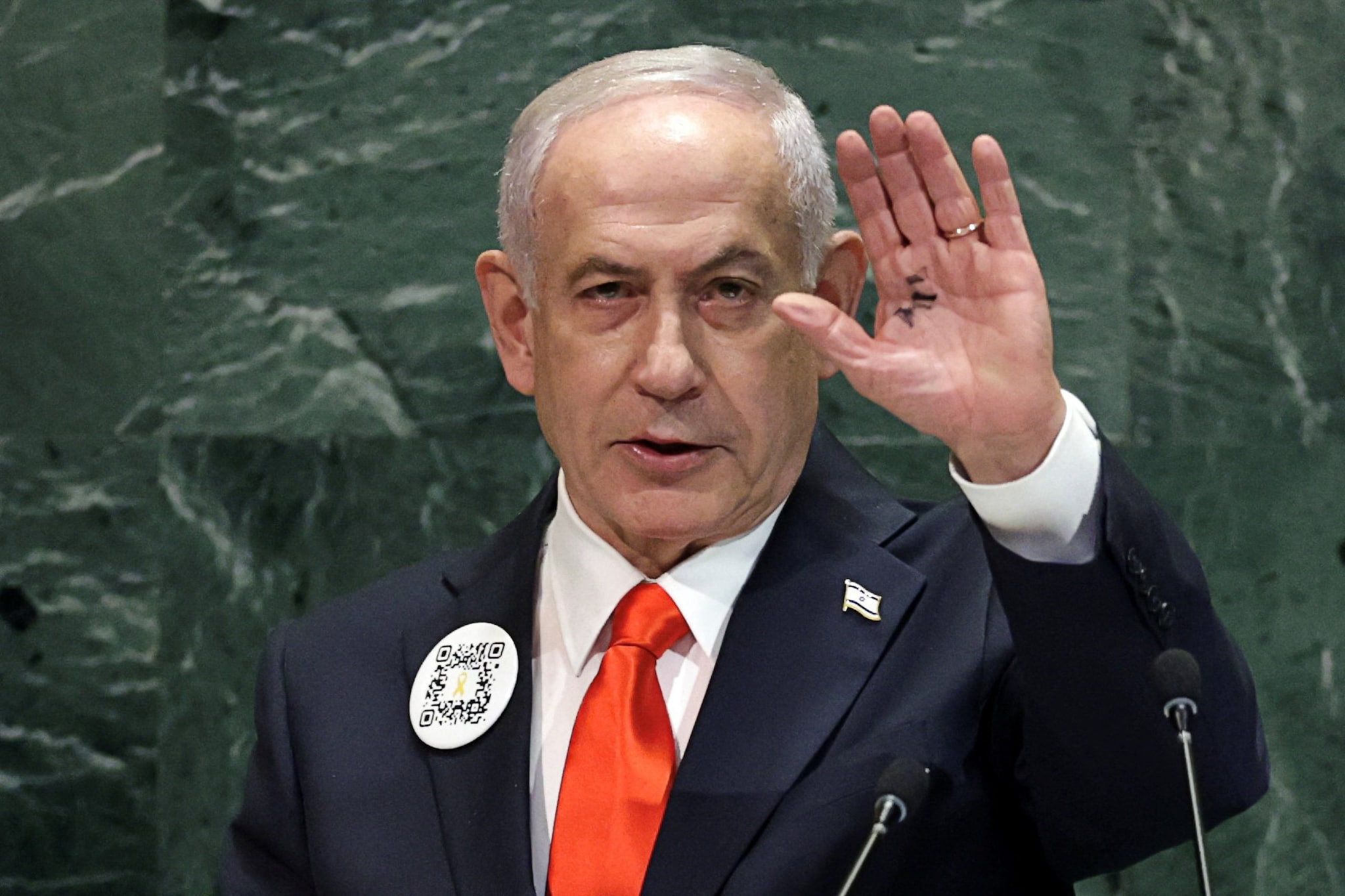
Jerusalem is broadcasting a victory that the rest of the world’s intelligence agencies cannot yet verify. Prime Minister Benjamin Netanyahu declared on Thursday that 20 days of relentless aerial bombardment under Operation Roaring Lion have "crushed to dust" Iran’s ability to enrich uranium and manufacture ballistic missiles. If true, it marks the most significant shift in Middle Eastern security since the 1979 Revolution. However, the gap between political rhetoric and the gritty reality of underground nuclear physics remains dangerously wide.
Netanyahu’s announcement, delivered with the practiced gravity of a leader who has spent three decades warning of this exact shadow, centers on a simple premise: the industrial base required to sustain a nuclear program is gone. But in the world of high-stakes proliferation, "gone" is a relative term.
The assessment vs the evidence
The Prime Minister’s claim is absolute. He asserts that the combined US-Israeli strikes—which began on February 28, 2026—have successfully targeted not just the enrichment halls of Natanz and Fordow, but the entire supply chain. This includes the high-precision workshops that manufacture IR-6 centrifuge components and the chemical plants required to produce the precursor gases for enrichment.
"We are wiping out their industrial base in a way that we didn’t do before," Netanyahu told reporters. The strategy appears to be a shift from "mowing the grass"—striking temporary targets—to a "scorched earth" policy against Iranian engineering. By targeting the factories that build the machines, rather than just the machines themselves, Israel aims to ensure that even if the war ended tomorrow, Tehran would have nothing to rebuild with.
The problem is the lack of independent eyes on the ground. The International Atomic Energy Agency (IAEA) has been largely blinded since the conflict intensified. While Director General Rafael Grossi confirmed that regional radiation monitors show no leaks, he cautioned that physical damage to buildings does not equate to the total loss of nuclear material.
Most critically, US Director of National Intelligence Tulsi Gabbard recently presented a contradictory assessment. In written testimony, the DNI suggested that Iran’s enrichment program had already been "obliterated" during last year’s Operation Midnight Hammer in June 2025 and that no significant efforts had been made to rebuild it before this latest round of fighting. This suggests a massive intelligence disconnect: either Netanyahu is claiming credit for destroying a program that was already defunct, or the US is severely underestimating Tehran’s clandestine persistence.
The ghost of the underground
The "why" behind this military campaign is rooted in a fear of the unreachable. Before the February strikes, Israeli intelligence warned that Iran was moving its most advanced centrifuges into new "immune" bunkers buried so deep beneath the Zagros Mountains that conventional bunker-busters could not reach them.
Military planners believe that once the centrifuges are behind hundreds of meters of granite, the nuclear issue moves from a military problem to a permanent geopolitical reality. By striking now, the US and Israel are betting that they caught the program during a vulnerable transit phase.
The enrichment math
To understand the stakes, one must look at the Separative Work Units (SWU).
- 60% Enrichment: Iran possessed roughly 440kg of uranium enriched to 60% before the strikes.
- The 90% Threshold: Crossing the gap from 60% to weapons-grade (90%) is not a massive technical hurdle. It represents only about 1% of the total effort required to enrich from raw ore.
- The Timeline: Experts suggest that with a single surviving cascade of IR-6 centrifuges, Iran could produce enough material for one nuclear device in just 25 days.
Netanyahu’s claim rests on the idea that every single one of these cascades has been neutralized. But "zero capacity" is a high bar. A nation that has mastered the centrifuge cycle for twenty years does not lose that institutional knowledge because a few factories are leveled. The blueprints exist. The scientists are still alive.
Cracks in the rotten wood
Beyond the centrifuges, Netanyahu is leaning heavily into the psychological collapse of the Iranian state. He described the regime as "rotten wood," hollowed out by the loss of Supreme Leader Ali Khamenei and dozens of top Revolutionary Guard officials.
The silence from Tehran is indeed deafening. The purported successor, Mojtaba Khamenei, has yet to make a public appearance, leading to rampant speculation about a power vacuum. Israel is clearly trying to "propagate the cracks," encouraging defections and hoping the Iranian public will seize the moment of military weakness to topple the Islamic Republic.
But history is a harsh teacher regarding "regime change" via airpower. While the industrial base might be reeling, the ideological core of the IRGC remains entrenched. Even as Netanyahu spoke, Iranian-aligned groups were launching retaliatory strikes across the Gulf, hitting energy targets in Qatar and causing global oil prices to skyrocket above $110 a barrel. This is not the behavior of a defeated entity; it is the behavior of a wounded animal with nothing left to lose.
The missing ground component
The most telling part of Netanyahu’s briefing was his admission that airpower has limits. "There has to be a ground component as well," he noted, though he refused to elaborate.
This is the hard truth of the 2026 war. You cannot verify the destruction of a nuclear program from 30,000 feet. To truly "crush to ashes" the enrichment capacity, boots must eventually hit the ground to inspect the ruins of Natanz and Fordow. Without physical seizure of the enriched stockpiles, the threat remains in a state of quantum uncertainty—destroyed on the evening news, yet potentially ticking away in a basement somewhere in Isfahan.
The war is entering a phase where declarations of victory are cheap, but the cost of being wrong is existential. If Netanyahu is right, he has secured Israel’s future for a generation. If he is wrong, and the enrichment continues in the dark, he has merely accelerated the countdown to a nuclear-armed Tehran with a grudge.
Would you like me to analyze the specific types of munitions being used to target these deep-buried Iranian facilities?