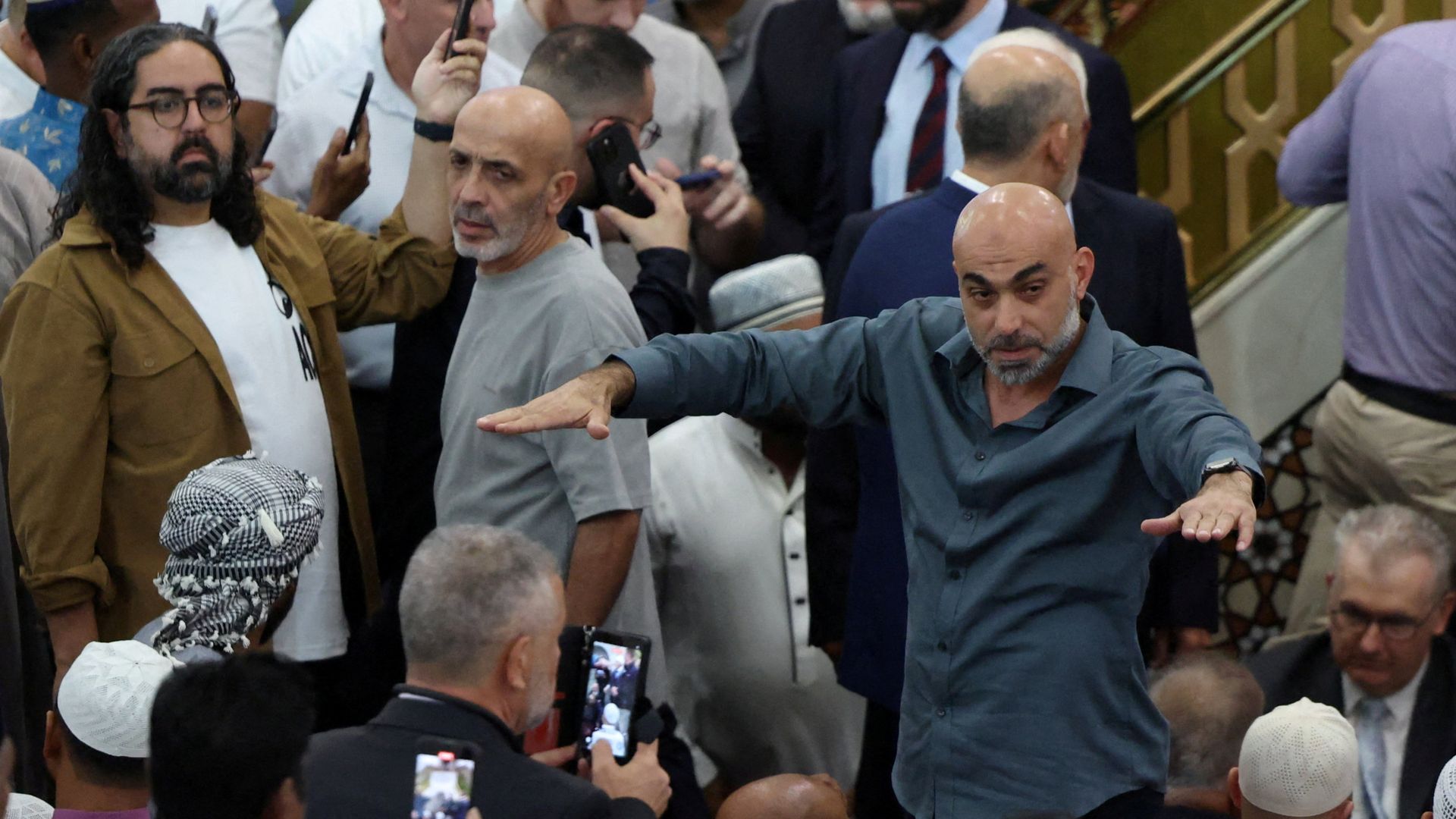
The sight of an Australian Prime Minister being ushered through a side exit to avoid his own citizens is never a sign of a healthy democracy. On Friday morning, Anthony Albanese and Home Affairs Minister Tony Burke discovered that the manicured world of political optics has finally collided with a community that feels its grief has been commodified. During Eid al-Fitr prayers at Sydney’s Lakemba Mosque, the traditional "warm reception" promised by staffers was punctured by shouts of "shame" and "genocide supporters."
While the Prime Minister’s office was quick to dismiss the incident as the work of a few "hecklers," the reality is far more combustible. This was not a random outburst of mindless dissent. It was the result of a calculated, months-long breakdown in trust between the Labor government and one of its most loyal voting blocs. The boos at Lakemba represent a tipping point where the "fine line" the government claims to be walking has finally snapped.
The Mirage of Social Cohesion
For years, the political playbook for Eid has been simple: show up, wear the scarf, take the photo, and mention "multicultural success." But 2026 is different. The air in Western Sydney is thick with a sense of betrayal that transcends simple party politics. The Muslim community isn't just watching the news; they are burying relatives. When Gamel Kheir, secretary of the Lebanese Muslim Association (LMA), stood before the 30,000-strong crowd to pan the government’s Middle East policy, he wasn't being a provocateur. He was reading the room.
The government’s attempt to frame the protests as a reaction to the recent outlawing of Hizb ut-Tahrir is a convenient, if transparent, distraction. By suggesting the anger is merely a defense of "extremist organizations," Albanese is attempting to delegitimize valid domestic concerns about foreign policy. It is a classic move from the Canberra manual: if you can’t answer the criticism, discredit the critic.
A Policy of Contradictions
The frustration boiling over at the mosque steps is fueled by a series of government decisions that many in Western Sydney view as incoherent at best and hypocritical at worst.
- The Herzog Invitation: Inviting Israeli President Isaac Herzog to Australia following the horrific Bondi terror attack in December 2024 was seen by many as a one-sided gesture of solidarity that ignored the mounting Palestinian death toll.
- Military Assets in the Gulf: Just last week, the government announced the deployment of an E-7A Wedgetail aircraft and air-to-air missiles to the UAE. While framed as "protection," the community sees it as further entanglement in a conflict they believe Australia should be de-escalating.
- The Bondi Fallout: The December 14 shooting at Bondi Beach, which claimed 15 lives, has been weaponized by some political figures to cast a shadow of suspicion over the entire Islamic community. Former PM Scott Morrison’s recent calls for a "national register for imams" only added fuel to the fire, creating an environment where Muslims feel like perpetual suspects rather than citizens.
The Electorate that Labor Forgot
Tony Burke, whose own electorate includes Lakemba, sat in the front row as the jeers rang out. For a man often touted as a bridge-builder, the silence from the crowd during his presence was deafening. Labor has long relied on the "Red Wall" of Western Sydney, assuming that social conservative values and immigrant aspirations would always find a home in the party of the worker.
That assumption is currently being shredded. The "community leaders" who used to deliver these votes are losing their grip on a younger, more politically engaged generation that values international consistency over local photo opportunities. The LMA’s decision to invite the Prime Minister was an attempt at "engagement," but for many in the pews, it felt like giving a platform to the very architects of their distress.
There is a growing realization in Canberra that the Muslim vote is no longer a monolith that can be bought with a few community grants and a plate of baklava. The anger is granular. It is directed at the specific language used in UN resolutions, the timing of military deployments, and the perceived double standards in how different groups of Australians are permitted to mourn.
The Security Apparatus and the Sacred Space
The removal of protesters by police—specifically the man identified as Sheikh Mukhlis—has created its own set of problems. To have a man dragged barefoot from the steps of a mosque during its most sacred celebration is an image that will circulate on social media long after the Prime Minister’s press release has been forgotten.
Albanese’s insistence that the event was "incredibly positive" is a masterclass in political gaslighting. When you have to sidestep a crowd of your own constituents to reach your car, the day is not a success. It is a security failure and a diplomatic disaster. The government’s refusal to acknowledge the depth of this resentment suggests they are either profoundly out of touch or banking on the fact that voters in Western Sydney have nowhere else to go.
That is a dangerous gamble. If the events at Lakemba prove anything, it’s that the community is finding its voice outside the traditional structures of party engagement. They are no longer waiting for a seat at the table; they are beginning to flip the table entirely.
What Happens When the Cameras Leave
As the Eid celebrations continue across the country, the government will likely retreat to the safety of the "Canberra bubble," hoping the news cycle moves on to the fuel crisis or the latest economic figures. But the sentiment at Lakemba won't evaporate.
The Royal Commission into the Bondi attack, while necessary, is already being criticized for a lack of consultation with Muslim bodies. If the government continues to treat "social cohesion" as something to be managed through surveillance and selective invitations, they will find the doors of more mosques closing to them.
The real reason the Prime Minister was booed isn't complicated. It wasn't about "extremist groups" or a lack of security. It was about a community that is tired of being talked about and is finally ready to talk back. The question for Labor isn't how to stop the booing, but whether they are actually prepared to listen to what the crowd is saying.
If you are a member of the Western Sydney community, you can track the progress of the Bondi Royal Commission's community consultation sessions via the official Department of Home Affairs portal to ensure your voice is actually on the record.