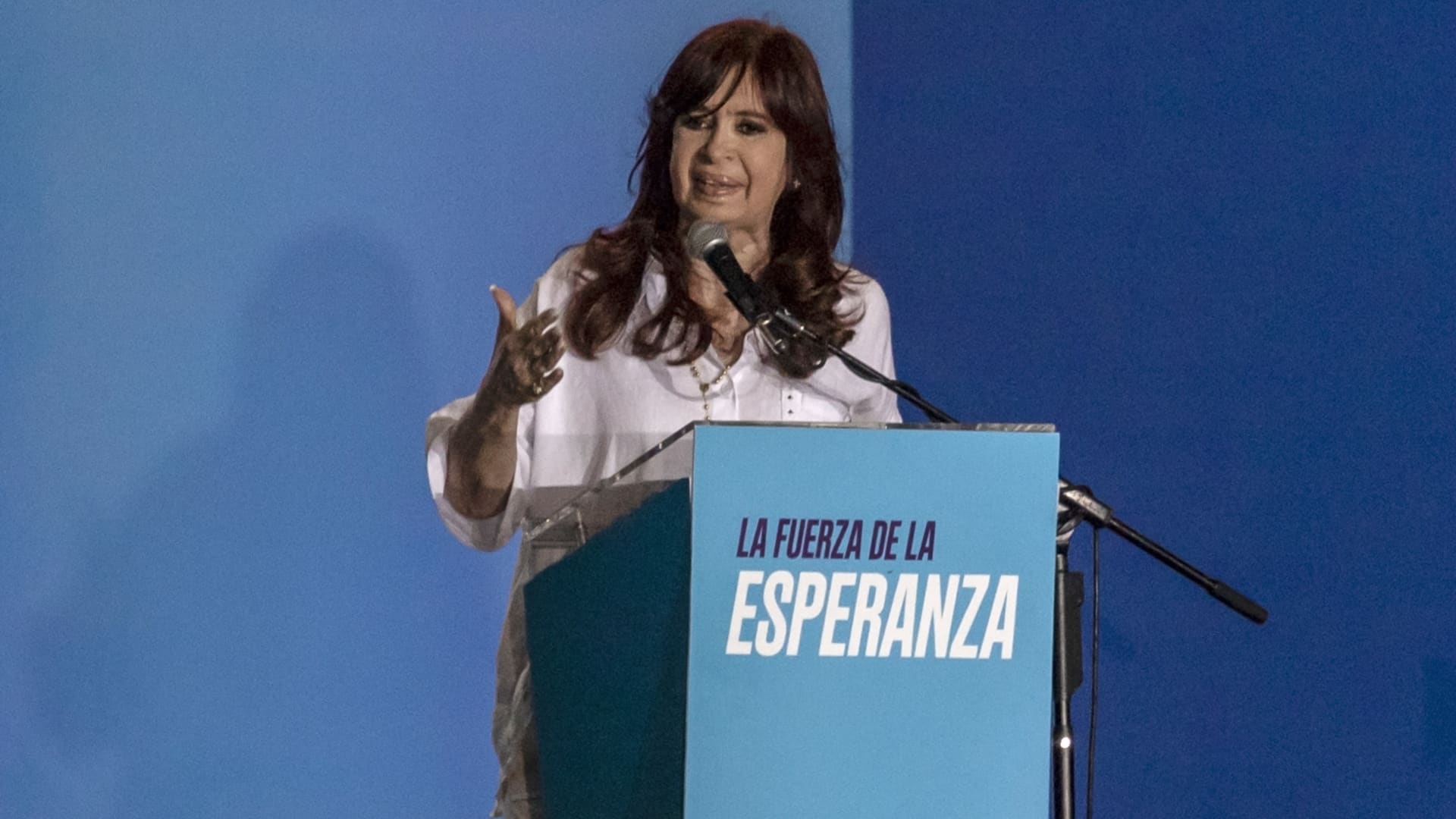
The political machinery in Buenos Aires has finally ground down the environmental safeguards of the Andes. By pushing through legislation that effectively strips protection from periglacial environments, the Argentine government has signaled that its mounting external debt carries more weight than its freshwater reserves. This isn't just a local regulatory shift; it is a fundamental pivot in how the country values its natural capital against the immediate demands of global commodity markets. The new framework allows multinational mining corporations to operate in high-altitude zones previously deemed off-limits, potentially unlocking billions in lithium, gold, and copper at the expense of the continent’s primary water towers.
The Economic Desperation Behind the Policy
Argentina is a country trapped in a cycle of fiscal volatility. For decades, the nation has grappled with triple-digit inflation and a recurring inability to meet its obligations to the International Monetary Fund. In this context, the vast mineral wealth buried beneath the Andean ice isn't seen as a geological feature, but as a strategic exit strategy.
The legislative push targets the 2010 Glacier Protection Law, a piece of environmental history that once stood as a global gold standard. That law strictly prohibited any activity that could affect glaciers or "periglacial" areas—the frozen ground surrounding glaciers that acts as a vital hydrological buffer. By redefining what constitutes a protected area, the new measures open the door for open-pit mining in the very places where the nation's water begins its journey.
Corporate interests have long argued that the original law was too broad. They claimed it halted projects that were miles away from visible ice. However, the science of high-altitude hydrology suggests that the "visible ice" is only the tip of the iceberg. The real work of water storage happens in the rock glaciers and permafrost, the exact regions now being sacrificed for the sake of the balance sheet.
A Targeted Erasure of Environmental Guardrails
The strategy used to pass this bill was clinical. It didn't involve a total repeal, which would have sparked a national uprising. Instead, it utilized "surgical" amendments to definitions. By narrowing the legal definition of a glacier to only include those that are "active" or of a certain size, the government has effectively declassified thousands of smaller ice bodies and periglacial features.
This is a victory for the "Big Three" of the mining world. Companies with eyes on the San Juan and Catamarca provinces have spent years in litigation or holding patterns, waiting for this specific moment. These provinces sit on some of the largest untapped copper and gold deposits on earth. In the eyes of the provincial governors, the environmental risk is a secondary concern compared to the promise of royalties, infrastructure, and job creation.
But the trade-off is lopsided. Mining in these altitudes requires immense amounts of water—the very water that these glaciers provide. To extract the minerals, you must consume the resource that makes life in the arid lowlands possible. It is a cannibalistic economic model.
The Myth of Sustainable High Altitude Mining
The industry often speaks of "mitigation" and "responsible mineral development." These are comfortable terms used in corporate boardrooms. In the thin air of the Andes, reality is much grittier.
When you strip the surface of a periglacial area, you change the thermal profile of the ground. The permafrost thaws. The rock glaciers, which move at a glacial pace but provide a steady trickle of water during the dry season, begin to collapse or dry up. No amount of "reclamation" can rebuild a hydrological system that took ten thousand years to form.
The Lithium Paradox
There is a bitter irony in the fact that much of this mining push is framed as part of the "green energy transition." Argentina forms part of the Lithium Triangle. To build the batteries for the world's electric vehicles, the world needs Argentine lithium.
- Extraction: Requires pumping massive amounts of brine from beneath salt flats.
- Water Usage: Depletes the surrounding freshwater aquifers that are fed by mountain runoff.
- Contamination Risk: Tailings dams at high altitudes are subject to seismic activity and extreme weather.
The world wants to save the climate by driving EVs, but the materials for those EVs are being sourced by destroying the very glaciers that regulate the climate of the Southern Cone. This isn't a transition; it's a relocation of environmental destruction.
Geopolitical Pressure and the IMF Shadow
We cannot look at this bill without looking at Washington and Beijing. Both powers are locked in a race for mineral security. Argentina, desperate for any influx of hard currency, is playing both sides.
The IMF has frequently "encouraged" Argentina to expand its export base. In diplomatic speak, that is a mandate to dig. The government knows that it cannot stabilize the Peso without a massive increase in exports. Agriculture, the traditional engine of the Argentine economy, is failing due to—wait for it—prolonged droughts caused by shifting climate patterns and reduced glacial runoff.
Instead of protecting the water to save the farms, the state has decided to mine the mountains to pay the debt. It is a short-term gamble with long-term consequences that will be felt by every vineyard in Mendoza and every fruit grower in the Rio Negro valley.
The Local Resistance and the Legal Front
Do not expect the implementation of this bill to go smoothly. The environmental movement in Argentina is decentralized but fierce. Local assemblies in places like Esquel and Famatina have successfully blocked mining projects in the past through sheer grit and civil disobedience.
The battle will now move from the halls of Congress to the provincial courts. Environmental lawyers are already preparing challenges based on the "Non-Regression Principle," an international legal concept which states that environmental protections, once established, cannot be rolled back.
However, the judiciary in Argentina is rarely insulated from political pressure. With the executive branch framing mining as a matter of "national survival," the courts may find themselves under immense strain to prioritize the economy over the ecosystem.
The Hidden Complexity of Periglacial Water
To the average observer, a periglacial area looks like a barren field of rocks. To a hydrologist, it is a sponge. During the winter, snow accumulates. During the summer, instead of all that snow melting and rushing down the mountain at once, the rock glaciers and permafrost trap the water and release it slowly.
This slow release is what keeps the rivers flowing during the months when there is zero rainfall. Without this buffer, the hydrology of the region becomes "flashy"—you get floods in the spring and bone-dry riverbeds by mid-summer.
Mining operations disrupt this flow in several ways:
- Dust Deposition: Dust from mining roads and explosions settles on nearby ice, darkening the surface.
- Albedo Effect: Darker ice absorbs more heat, causing it to melt at an accelerated rate.
- Chemical Seepage: The process of leaching minerals often involves cyanide or sulfuric acid. One leak in a high-altitude environment can poison a watershed that spans three provinces.
The 2015 Veladero spill, where over a million liters of cyanide solution leaked into the Jachal River system, serves as a grim reminder. That happened with the old protections in place. Under the new, relaxed standards, the frequency of such "accidents" is almost guaranteed to rise.
The Corporate Narrative vs. The Ground Truth
Industry analysts will tell you that this legislation brings "certainty" to the market. They argue that investors need to know the rules won't change mid-project. This is a half-truth. Investors don't want certainty; they want lower costs.
By removing the periglacial protections, the government has lowered the cost of entry. It has made it cheaper to build roads, cheaper to dispose of waste, and cheaper to ignore the hydrological impact. The "certainty" being sold is the certainty that profit will be prioritized over the water security of the next generation.
The Silence of the International Community
Where is the international outcry? Usually, when a country rolls back protections on a vital global ecosystem, there is a chorus of condemnation from the UN or G7 leaders.
The silence here is deafening because everyone wants what is under that ice.
Europe wants the copper for its power grids. North America wants the lithium for its tech industry. China wants everything it can get its hands on to fuel its industrial machine. Argentina’s glaciers are being traded for a seat at the table of the modern global economy.
A Legacy of Extraction
History in South America is a long, repetitive story of extraction. From the silver of Potosí to the tin of Bolivia, the continent has often gutted its interior to satisfy distant markets. This latest legislative move is simply the 21st-century chapter of that same book.
The difference this time is the stakes. You can live without silver. You can live without lithium batteries. You cannot live without water. By the time the mineral veins are tapped out and the mining camps are abandoned, the glaciers will not simply "grow back" when the policy changes.
The immediate action for any observer of the Andean region is to track the permit applications in the San Juan province over the next six months. The speed at which these permits are granted will reveal the true depth of the pre-arranged deals that made this legislation possible. The era of the "Sacrifice Zone" has reached the highest peaks of the Andes, and the cost of this transition is being written in ice.
Watch the flow of the Jachal and San Juan rivers. They are the true indicators of the country's health, far more accurate than any GDP report issued from Buenos Aires. When the rivers begin to fail in the height of summer, the "economic miracle" of the mining boom will be revealed for what it truly is: a liquidation sale of the nation's future.