Bill Plaschke has a gift for making Los Angeles sports fans lose their minds. Whether you love his columns or read them just to find something to argue about at the bar, the man knows how to poke the bear. His recent Dodgers predictions have once again split the city right down the middle. Some fans see his optimism as a refreshing change of pace for a team that often chokes when the bright lights of October arrive. Others think he's just setting everyone up for another massive heartbreak.
The reality is that being a Dodgers fan in 2026 is an exercise in managed stress. You have the highest payroll, the biggest stars, and a regular season record that usually looks like a video game cheat code. Yet, the postseason has been a different story entirely. Plaschke’s take on the current roster isn't just about batting averages or pitching rotations. It’s about the "vibe" of the clubhouse, something that’s notoriously hard to quantify but impossible to ignore.
The Polarization of Plaschke
You either think he's the voice of the city or a jinx in a suit. There’s no in-between. When Plaschke says the Dodgers are finally "built for this," he’s leaning into a narrative that ignores the cold, hard analytics in favor of grit and leadership. Analytics-heavy fans hate this. They want to talk about exit velocity and spin rates. Plaschke wants to talk about the look in a player’s eye during the seventh inning.
It’s easy to see why some fans are buying in this time. The team has moved away from just buying every available All-Star. They've started focusing on guys who have a bit of an edge, players who don't mind getting their jerseys dirty. For a team that has often looked "too corporate" in the playoffs, this shift is massive. If you've watched this team crumble against the Diamondbacks or the Padres in years past, you know that talent hasn't been the issue. It's been the energy.
Why the Prediction Actually Holds Water
Forget the sentimental stuff for a second. Let's look at the actual construction of this roster. In previous seasons, the Dodgers relied heavily on a "next man up" philosophy that worked great over 162 games but failed in a five-game series. This year feels different because the top-heavy nature of the lineup is supported by a much more versatile bench.
- Starting Pitching Depth: Unlike last year, where the rotation was held together by tape and prayer, the current staff has three legitimate aces.
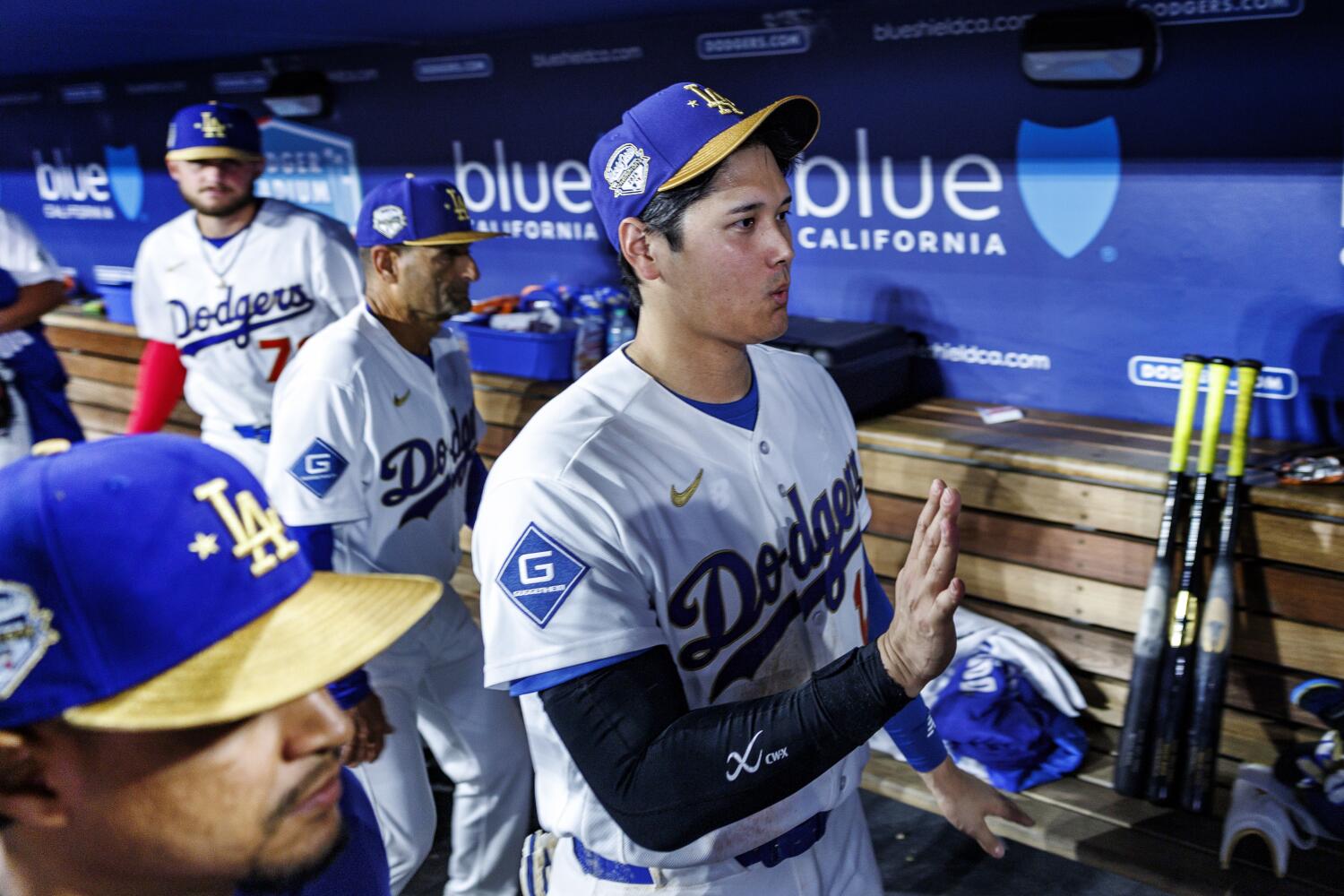
- The Ohtani Factor: Shohei Ohtani isn't just a player; he’s a psychological weight on the opposing dugout. His presence changes how managers use their bullpens three innings before he even steps into the box.
- Bullpen Flexibility: The move toward "firemen" who can enter in high-leverage situations regardless of the inning has finally caught up to the rest of the league.
Plaschke’s critics argue that he’s too reactionary. They say he falls in love with a storyline and ignores the data. But baseball is a game of storylines. It’s a game of momentum. When the Los Angeles Times' lead sports voice puts his stamp of approval on a team, it creates a self-fulfilling prophecy of expectations. The players feel it. The fans feel it.
The Fear of the Jinx
Dodger fans are superstitious. It’s part of the job description. There is a very vocal segment of the fanbase that wishes Plaschke would just stay quiet. They remember the times he guaranteed a victory only for the team to go cold at the plate for 27 straight innings. To these fans, a Plaschke "winner" prediction is a kiss of death.
But look at the landscape of the National League right now. The Braves are dealing with injuries. The Phillies are inconsistent. The path is wider than it’s been in years. If you aren't going to be confident now, when will you be? Waiting for "perfect" conditions in baseball is a fool's errand. You take the roster you have and you ride the wave.
What Most People Get Wrong About Postseason Predictions
Everyone tries to predict the World Series winner based on who is "best." That’s the wrong metric. The playoffs aren't about being the best team; they're about being the team that doesn't blink first. Plaschke is betting on the Dodgers finally having the "don't blink" gene.
The criticism that Plaschke is just "playing the hits" to get clicks is lazy. He’s lived in this market for decades. He’s seen the 1988 magic and the 2017 heartbreak. When he sees something different in the dugout, it's worth listening to, even if you end up disagreeing. The Dodgers have spent years trying to solve the October puzzle with a calculator. Maybe this year, they're trying to solve it with a sledgehammer.
The Real Test for Dave Roberts
It all comes back to the manager. Dave Roberts is the lightning rod for everything that goes wrong. If the Dodgers win, it’s because the talent was undeniable. If they lose, it’s because Roberts pulled a pitcher too early or left a sub in too long.
Plaschke’s prediction puts Roberts in a tough spot. It raises the floor for what is considered a "successful" season. Anything short of a ring will now be viewed as a catastrophic failure of leadership. That’s the pressure this city demands. We don't do "participation trophies" at Chavez Ravine.
Moving Past the Regular Season Hype
The Dodgers have won the division so many times it feels like a formality. The fans are bored by 100-win seasons. They want the parade. Plaschke knows this. His writing reflects the desperation of a city that knows its window won't stay open forever.
- Stop looking at the standings: They don't matter anymore. A 90-win team can steamroll a 110-win team if they get hot at the right time.
- Watch the middle relief: The games will be won or lost in the 6th and 7th innings.
- Ignore the national media: They love to hate on LA.
If you’re a fan, don't let the fear of a jinx stop you from enjoying the ride. Plaschke might be right, or he might be wrong, but he’s definitely making the conversation more interesting. That’s his job. Your job is to show up and hope the bats don't go silent when the weather turns cold.
Go check the box scores from the last ten games. Look at how many times the Dodgers have come back late. That’s the "winner" quality Plaschke is talking about. It’s not about the blowouts; it’s about the grind. If they keep that edge, the prediction won't just be a winner to some—it’ll be a reality for everyone.