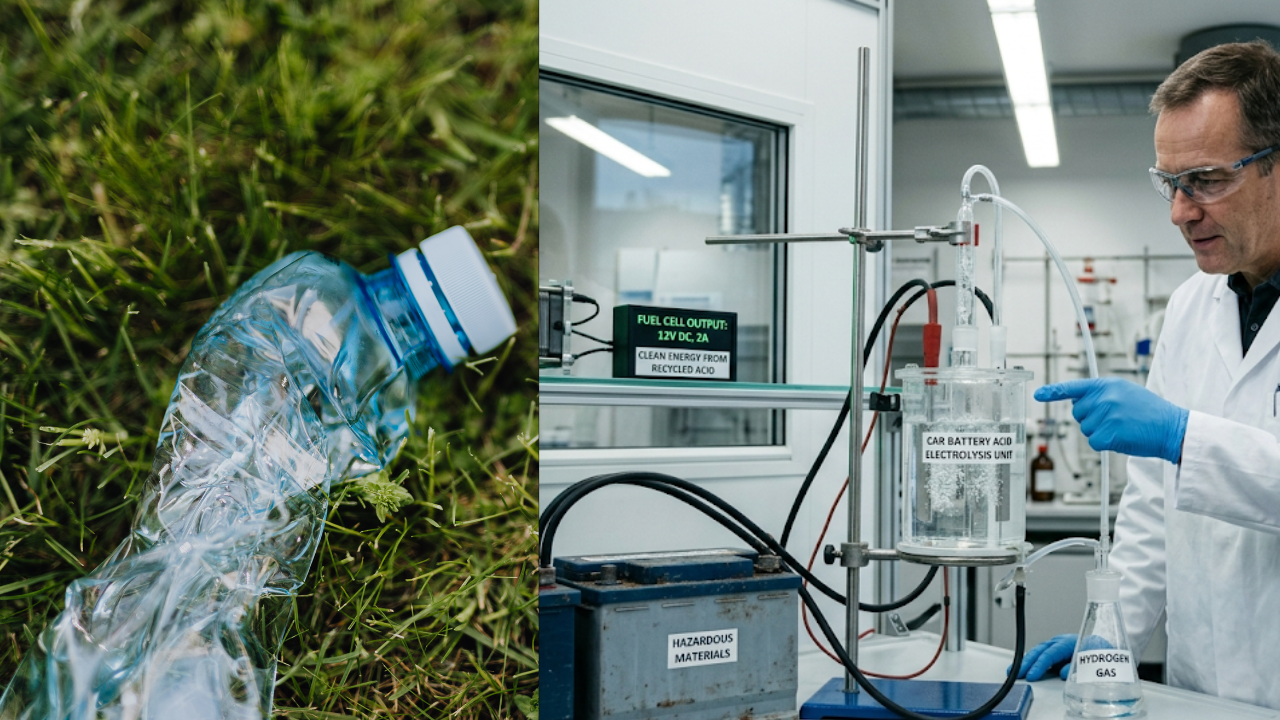
Battery acid and plastic waste are usually two of the biggest headaches in environmental management. We’ve spent decades trying to figure out how to keep lead-acid batteries out of landfills while simultaneously failing to recycle the vast majority of our plastic. Most people think these are separate problems. They’re wrong. Scientists have figured out how to use the "garbage" from one to fix the "garbage" from the other.
Researchers at Rice University and several partner institutions recently discovered a way to turn the dilute sulfuric acid from old car batteries into a tool for chemical recycling. This isn't just another feel-good lab experiment that will never see the light of day. It's a massive shift in how we think about waste streams. Instead of treating battery acid as a toxic byproduct that needs expensive neutralization, we can use it as a catalyst to break down stubborn plastics into high-value chemicals.
Why Plastic Recycling is Mostly a Lie
Let's be real about the state of recycling. You see the little triangles on your containers and feel good putting them in the blue bin. The truth? Most of that plastic ends up burned or buried. Mechanical recycling—the kind where we wash, shred, and melt plastic—degrades the material every single time. After a few rounds, it’s useless.
Chemical recycling is the real answer, but it’s always been too expensive. It usually requires high temperatures, massive amounts of energy, and costly catalysts. That’s where the car battery comes in. By using the acidic waste already sitting in scrap yards, we can bypass the need for expensive new chemicals.
The process works through a method called solvent-free acid catalysis. Most car batteries contain a mixture of water and sulfuric acid. When a battery dies, that acid is often contaminated with lead and other heavy metals, making it a nightmare to process. However, that same acidic punch is exactly what you need to snap the long molecular chains in plastics like polyethylene and polypropylene.
The Chemistry of Turning Junk into Gold
The science here is actually quite elegant. When you introduce plastic waste to the recovered battery acid under specific conditions, it triggers a reaction that breaks the carbon-carbon bonds. You aren't just melting the plastic. You're unzipping it.
What comes out the other side isn't just "recycled plastic." It’s a suite of valuable hydrocarbons. We’re talking about chemical feedstocks that can be used to make new, virgin-quality plastics, or even clean-burning fuels. It's a closed loop that actually makes sense financially.
I’ve seen plenty of "green" tech that relies on government subsidies to survive. This feels different. The raw materials—dead batteries and used plastic—are essentially free or have a negative cost because people pay to get rid of them. When your input costs are below zero, the economics of the entire operation change.
Solving the Battery Disposal Nightmare
Lead-acid batteries are the most recycled consumer product in the world, but the process is far from perfect. While the lead is easy to recover and reuse, the acid is a different story. Usually, recyclers have to neutralize it with base materials like lime, creating a huge volume of calcium sulfate waste. It’s a mess.
By diverting this acid into plastic recycling plants, we solve two problems at once. We eliminate a hazardous waste stream from the battery industry and provide a low-cost catalyst for the plastic industry. It’s the kind of industrial symbiosis that we need if we’re ever going to get serious about a circular economy.
Breaking Down the Numbers
- 15 million tons: The approximate amount of lead-acid battery waste generated globally each year.
- 350 million tons: The amount of plastic waste produced annually, with less than 10% actually recycled.
- 90% reduction: The potential drop in energy requirements when using acid catalysis compared to traditional thermal cracking.
These aren't small improvements. They’re tectonic shifts in industrial efficiency.
The Problem with Current Solutions
If you look at the current "state-of-the-art" in plastic-to-fuel tech, it’s mostly pyrolysis. You shove plastic into a giant oven without oxygen and heat it until it turns into oil. It works, but it’s energy-intensive and produces a lot of carbon dioxide.
Using battery acid as a catalyst allows the reaction to happen at much lower temperatures. We’re talking about saving a massive amount of electricity or gas. Plus, the output is cleaner. Pyrolysis oil often needs heavy refining before it can be used for anything. The acid-catalyzed output is much more "ready to go."
What This Means for Your Future Car
You might think that the rise of Electric Vehicles (EVs) makes this irrelevant. Don't be fooled. Even though Tesla and others use Lithium-ion packs for propulsion, almost every car on the road—including EVs—still uses a standard 12-volt lead-acid battery to run the lights, sensors, and computer systems.
Lead-acid batteries aren't going anywhere. They’re cheap, reliable, and work in extreme temperatures where Lithium-ion struggles. This means we’ll have a steady supply of battery acid for the foreseeable future. We might as well use it to fix the plastic crisis.
Overcoming the Heavy Metal Hurdle
The biggest skeptics will point out that battery acid is full of lead. You don't want lead in your recycled plastic. That’s a valid concern. The researchers at Rice University addressed this by developing a separation process that pulls the lead out of the acid before it ever touches the plastic.
The recovered lead goes back into the battery supply chain, and the purified acid goes to the plastic reactor. It’s a multi-step refinement that ensures the final plastic products are safe for consumer use. If we don't get the purification right, the whole system collapses. But the data shows it's entirely doable with existing industrial tech.
Stop Thinking About Waste as a Liability
The real takeaway here is a change in mindset. For too long, we’ve looked at industrial byproducts as "problems" to be hidden. We spend billions on "disposal" and "remediation." That’s old-school thinking.
The future belongs to the engineers who can see the energy stored in a toxic puddle. Battery acid is just concentrated chemical energy. Plastic is just stored carbon. When you stop seeing them as trash, you start seeing them as the building blocks for the next industrial revolution.
Practical Steps for the Industry
If you're in the manufacturing or waste management space, you need to be watching these pilot programs closely. The transition from lab to factory floor is where most of these ideas die, but the "waste-plus-waste" model has a much higher chance of success because of the inherent cost advantages.
- Map your waste streams. Stop looking at your battery disposal and plastic scrap as separate line items on the balance sheet.
- Invest in separation tech. The value isn't in the raw waste; it's in the purified components.
- Partner up. Battery recyclers need to start talking to plastic processors. These two industries have never had a reason to speak to each other until now.
- Advocate for regulatory clarity. We need laws that encourage the "beneficial reuse" of hazardous materials rather than just strict disposal mandates.
The tech is ready. The math works. Now we just need the industrial guts to build it at scale.