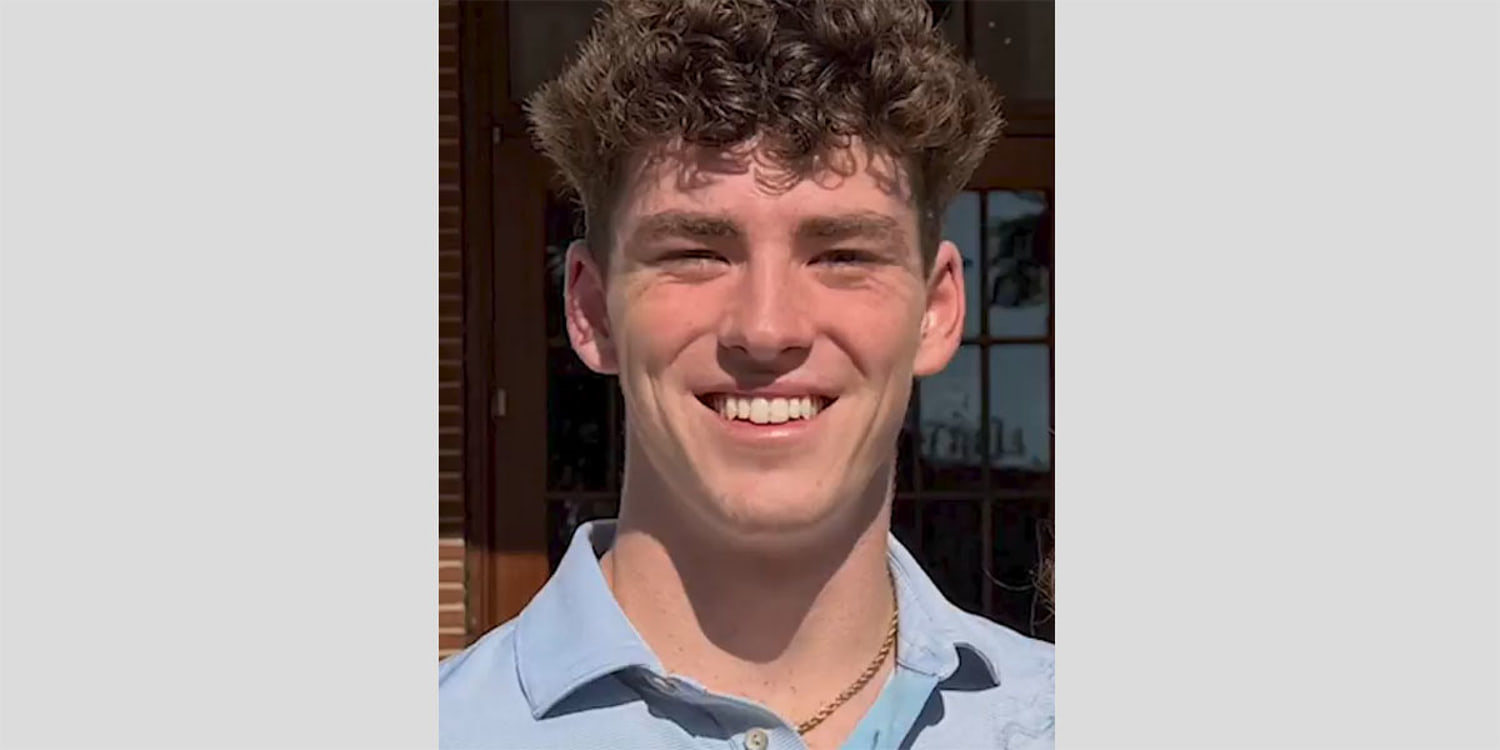
The disappearance of a University of Alabama student after a night out at a Barcelona nightclub is not an isolated tragedy. It is the latest data point in a systemic failure of safety for American study-abroad students in one of Europe’s most visited cities. When a young adult vanishes in a foreign metro, the immediate response usually focuses on the individual's last known movements. However, the investigation must go beyond the grainy CCTV footage of a dance floor. We have to examine the predatory mechanics of the Mediterranean nightlife industry and the dangerous gap between American campus culture and Spanish street reality.
The student, identified in reports as 21-year-old Hudson Triplett, was last seen in the early hours of the morning after leaving a popular venue in the Olympic Port area. This district is a known magnet for international students and tourists. It is also a known hunting ground for petty criminals and organized theft rings. The transition from the high-security environment of a modern American university to the chaotic, unregulated flow of a Barcelona sunrise is a shock that many students are unprepared to handle.
The Illusion of Mediterranean Safety
Barcelona markets itself as a playground of sun, Gaudí, and endless tapas. This postcard image masks a grim reality of urban crime statistics. While violent crime rates in Spain are lower than in many major U.S. cities, the rate of "hurto"—non-violent theft or pickpocketing—is astronomical. In a crowded club environment, the loss of a smartphone is more than a financial inconvenience. It is a total severance of a student’s lifeline.
Without a phone, a student loses their GPS, their ability to call a ride-share, and their contact with their "buddy system" peers. In the early hours of the morning, a disoriented foreigner without a way to navigate the winding streets of the Gothic Quarter is effectively stranded.
The city’s nightlife infrastructure often works against the safety of the patron. Many clubs in the coastal areas employ "promoters" who lure young tourists with promises of free shots or VIP entry. Once inside, the environment is designed for maximum consumption and minimal oversight. When a student becomes too intoxicated or separated from their group, the bouncers' priority is often simply to remove them from the premises. They are pushed out into the street, alone, and the club’s liability ends at the velvet rope.
The Study Abroad Security Gap
American universities have long viewed study-abroad programs as essential revenue drivers and "global citizenship" builders. Yet, the pre-departure briefings often lean more toward cultural etiquette than tactical survival. Students are told how to order coffee in Spanish, but they aren't always trained on how to spot a "distraction theft" or what to do if they are spiked.
The "buddy system" is the gold standard of travel safety. It fails the moment someone decides to stay for one more drink or leaves with a new acquaintance. In the Alabama case, the separation happened in that liminal space between the club exit and the journey home. This is the "kill zone" for safety.
Universities often rely on third-party providers to manage these programs. These providers have varying levels of local expertise. Some maintain 24-hour emergency lines, while others are essentially travel agencies with an academic veneer. The lack of a unified, rigorous safety protocol across the industry leaves students vulnerable to the specific predatory patterns of European nightlife hubs.
The Geography of Vulnerability
Certain areas of Barcelona are notorious for incidents involving tourists.
- The Olympic Port: A concentrated strip of high-capacity clubs where the density of intoxicated tourists is highest.
- Las Ramblas: A primary artery that becomes a gauntlet of street dealers and pickpockets after midnight.
- El Raval: Narrow, poorly lit streets where navigation becomes a nightmare for the uninitiated.
Criminals in these areas don't always look like "thugs." They are often well-dressed, blending into the crowd, waiting for the moment a student shows signs of distress or isolation. The "muletta" technique, where one person distracts a victim while another grabs their belongings, is practiced with surgical precision. If a student is separated from their group and lacks a phone, they are an easy target for "friendly" locals offering directions that lead into dead ends.
The Role of Local Law Enforcement
The Mossos d’Esquadra, Catalonia’s police force, faces an uphill battle. They are frequently overwhelmed by the sheer volume of tourists. There is also a cultural friction. In Spain, public intoxication and late-night revelry are normalized. A student stumbling down the street might be seen by police as just another party-goer, not someone in need of intervention.
Furthermore, the legal system in Spain often treats non-violent theft as a minor offense. Criminals who are caught are frequently back on the street within hours. This "revolving door" effect emboldens petty criminals to escalate their tactics. For an American student used to a more visible and proactive police presence on campus, the hands-off approach of local authorities can be a lethal surprise.
The Digital Lifeline and Its Failure
We have reached a point where safety is entirely digitized. We rely on "Find My" apps and Uber logs to track our loved ones. But these tools are useless if a phone is stolen or the battery dies. In several cases of missing students in Europe, the trail goes cold the moment the digital signal disappears.
The search for the Alabama student has relied heavily on tracing digital footprints. This is a reactive measure. Proactive safety requires "analog" backups:
- Carrying a physical card with the address of the accommodation.
- Having a designated meeting spot if the group gets separated.
- Carrying a hidden "emergency" stash of cash that is not in a wallet.
Relying on a smartphone in a high-theft environment like Barcelona is a single point of failure. When that device is gone, the student’s ability to solve their own problem evaporates.
The Spiking Epidemic
While not confirmed in the Alabama case, the rise of drink spiking in European clubs is a factor that can no longer be ignored. The use of substances like GHB or high-potency benzodiazepines allows predators to lead a victim away in plain sight. To an observer, it simply looks like a friend helping a drunk companion.
This is the "why" behind many disappearances. A student doesn't just wander off into the sea; they are often "managed" by someone who has neutralized their ability to resist. The industry’s refusal to implement stricter glass-monitoring or more aggressive security vetting for promoters contributes directly to this environment.
The Responsibility of the Institution
Universities cannot simply wash their hands of these incidents by citing "personal responsibility." If a school facilitates a program, they are endorsing the environment. There must be a move toward more integrated safety measures:
- Localized Safety Apps: Not just generic GPS, but apps that link directly to local private security or university-vetted transport.
- Mandatory Late-Night Transport: Ensuring students have a pre-paid, safe way to return from designated nightlife zones.
- Aggressive Vetting of Venues: Warning students away from specific clubs known for high incident rates.
A Pattern of Silence
There is a tendency for programs to downplay these risks to avoid scaring off prospective applicants. This silence is dangerous. By treating a disappearance as a freak accident rather than a predictable outcome of a high-risk environment, the industry fails to evolve.
The search for the Alabama student continues, with local authorities and the U.S. Consulate involved. Every hour that passes without a lead increases the pressure on the city to address its "dark side." For the family, the wait is agonizing. For the thousands of other American students currently in Europe, the lesson is clear: the city that never sleeps is also a city that never stops watching for a moment of weakness.
The true definitive action for any student or parent involved in these programs is to stop viewing study abroad as a vacation and start viewing it as a high-stakes environment that requires professional-level situational awareness. The "Mediterranean lifestyle" has a cost, and it is often paid by those least prepared to handle its shadows.
Demand a full security audit of your university’s study abroad partner before signing the next waiver.
Contact your university’s Dean of Students to ask for the specific crime statistics of their international satellite campuses.