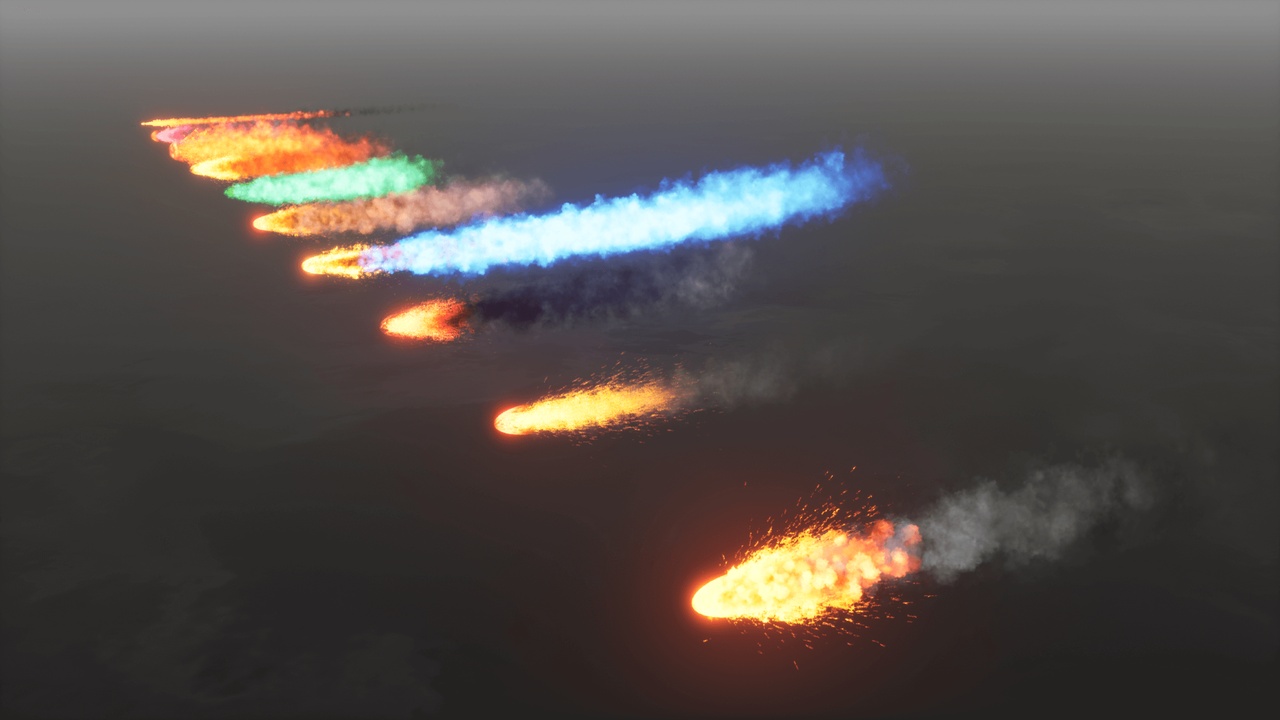
The success of the Artemis II mission hinges not on the lunar flyby, but on the management of kinetic energy dissipation during the final 20 minutes of flight. When the Orion spacecraft hits the Earth's atmosphere at 11 kilometers per second (approximately 25,000 mph), it transitions from a deep-space vehicle into a high-velocity heat engine. The survival of the crew—Reid Wiseman, Victor Glover, Christina Koch, and Jeremy Hansen—is a function of structural integrity under extreme thermal loading and the precision of the Skip Re-entry maneuver. This phase is characterized by a "fireball" caused by the compression and ionization of air molecules, creating a plasma sheath that disrupts communication and tests the physical limits of the Avcoat ablator.
The Thermodynamics of Kinetic Energy Dissipation
Returning from the Moon involves significantly higher energy states than returning from Low Earth Orbit (LEO). An Artemis capsule carries roughly twice the kinetic energy of a SpaceX Dragon returning from the International Space Station. Because kinetic energy is proportional to the square of velocity—represented as $KE = \frac{1}{2}mv^2$—even a small increase in speed results in a disproportionate increase in the thermal load the heat shield must absorb and shed.
The thermal protection system (TPS) must manage temperatures reaching 2,760°C (5,000°F). This is achieved through ablation, a process where the outer layer of the Avcoat material—a glass-fiber-reinforced epoxy resin—chemically decomposes and chars. This char layer acts as an insulator, while the gases released by the decomposition carry heat away from the capsule in a boundary layer of cooler air.
- The Stagnation Point: The highest heat flux occurs at the center of the heat shield's blunt face.
- Radiative vs. Convective Heating: At lunar return velocities, radiative heating from the shock layer plasma contributes significantly more to the total heat load than in LEO returns, where convective heating dominates.
- Structural Integrity: The underlying titanium and aluminum structure must remain below 175°C to prevent warping or mechanical failure.
The Skip Re-entry Framework
Artemis II will utilize a "Skip Re-entry" trajectory, a maneuver designed to optimize landing precision and minimize the g-loads experienced by the crew. Unlike the Apollo-era direct entry, which was limited by the computing power of the 1960s, Orion’s guidance systems allow for a more sophisticated path through the upper atmosphere.
- The Initial Dip: Orion enters the atmosphere at a specific flight path angle. If the angle is too steep, the capsule burns up; if it is too shallow, it skips off the atmosphere back into deep space.
- The Lofting Phase: After the initial deceleration, the capsule uses its lift-to-drag ratio to "skip" back up out of the dense atmosphere, effectively cooling the heat shield and extending the range of the landing site.
- Final Descent: The capsule re-enters the atmosphere a second time at a lower velocity, allowing for a more controlled parachute deployment.
This method solves the geographical constraint of landing near recovery assets in the Pacific Ocean regardless of where the Moon is positioned relative to the Earth during the return window. It decouples the entry point from the landing point, providing a wider operational margin.
Mechanical Redundancy in the Parachute Sequence
Decelerating from supersonic speeds to a safe splashdown velocity requires a three-stage parachute architecture. Any single-point failure in this sequence could lead to a catastrophic impact. The system is designed with 11 total parachutes, operating in a highly choreographed sequence triggered by barometric pressure and GPS data.
- Drogue Deployment: At approximately 25,000 feet, two drogue chutes deploy to stabilize the capsule and slow it from 300 mph to 100 mph.
- Pilot Chutes: Three small pilot parachutes pull out the mains.
- Main Parachutes: Three massive main chutes, totaling over 2.25 acres of fabric, reduce the descent speed to approximately 20 mph for splashdown.
The system is designed for "two-out" capability. If one main parachute fails to inflate, the remaining two can still bring the crew home safely, though at a slightly higher impact velocity. This redundancy is the primary risk mitigation strategy for the final phase of the mission.
Communication Blackout and Plasma Interference
The "fireball" phase creates a localized region of ionized gas around the vehicle. This plasma is electrically conductive and reflects radio waves, resulting in a communication blackout. During Artemis II, this blackout is expected to last several minutes.
The physics of this phenomenon is tied to the Mach number. As the shockwave compresses the air, the temperature rises enough to strip electrons from nitrogen and oxygen molecules. For the ground crew, this period is a "dead zone" where telemetry is lost. The skip re-entry maneuver actually creates two separate blackout periods: one during the initial atmospheric dip and a second, shorter one during the final descent.
Engineers manage this by utilizing high-frequency TDRS (Tracking and Data Relay Satellite) links that attempt to "look" through thinner parts of the plasma sheath behind the capsule, but total connectivity is never guaranteed.
Operational Risk during Recovery
The final risk factor is the "Safe Haven" window between splashdown and recovery. The Orion capsule is designed to remain upright in the water using a series of five inflation bags on the top of the craft (the Crew Module Uprighting System). If these fail, the capsule could remain inverted (Stable II position), putting the crew at risk of seasickness and complicating the extraction.
Recovery forces, led by the U.S. Navy and NASA's Exploration Ground Systems, must reach the capsule within two hours. The thermal soak-back—where heat stored in the heat shield begins to migrate into the cabin after the cooling airflow stops—means the internal temperature can rise quickly once the capsule is bobbing in the ocean.
The recovery team uses the USS San Diego or a similar LPD-class ship. The ship maneuvers close to the capsule, and divers attach lines to winch it into the flooded well deck. This operation requires calm seas; high sea states represent the primary weather-related "no-go" criteria for the entire return sequence.
The Precision of Flight Path Angle (FPA)
The margin for error in the Entry Interface (EI) is measured in tenths of a degree. An FPA that is too steep increases the ballistic coefficient impact, leading to peak g-loads that exceed human physiological limits (potentially above 10g). Conversely, an FPA that is too shallow fails to capture the craft, leading to an unintended "skip" that could put the crew on a trajectory that misses Earth entirely or results in a landing thousands of miles from the recovery fleet.
The flight computer calculates these adjustments in real-time by rotating the capsule. Because the Orion's center of gravity is offset, rotating the craft changes the direction of the lift vector. By "rolling" the capsule, the guidance system can steer it left, right, up, or down through the thin upper atmosphere.
The mission profile for Artemis II demands an unprecedented level of integration between autonomous guidance and thermal material science. The transition from a 400,000 km lunar transit to a specific 10-meter patch of the Pacific Ocean is a problem of energy management. The strategic priority for NASA remains the validation of the Avcoat performance data gathered from the uncrewed Artemis I mission, specifically addressing the "char loss" or unexpected erosion patterns observed during that flight. For Artemis II, the heat shield has been modified to ensure the stagnation point does not experience localized thinning beyond safety margins.
The focus now shifts to the human factor: ensuring the life support systems can withstand the rapid pressure and temperature oscillations inherent in a skip re-entry. The success of this mission will define the operational envelope for all subsequent Moon-to-Mars transit architectures.
The final tactical variable is the timing of the Service Module separation. This must occur precisely before entry interface to ensure the Service Module burns up over an unpopulated area of the ocean while the Crew Module maintains its specific aerodynamic orientation. Failure to achieve clean separation would result in an aerodynamic instability that the reaction control system (RCS) could not compensate for, leading to vehicle breakup before the thermal protection system can even engage.