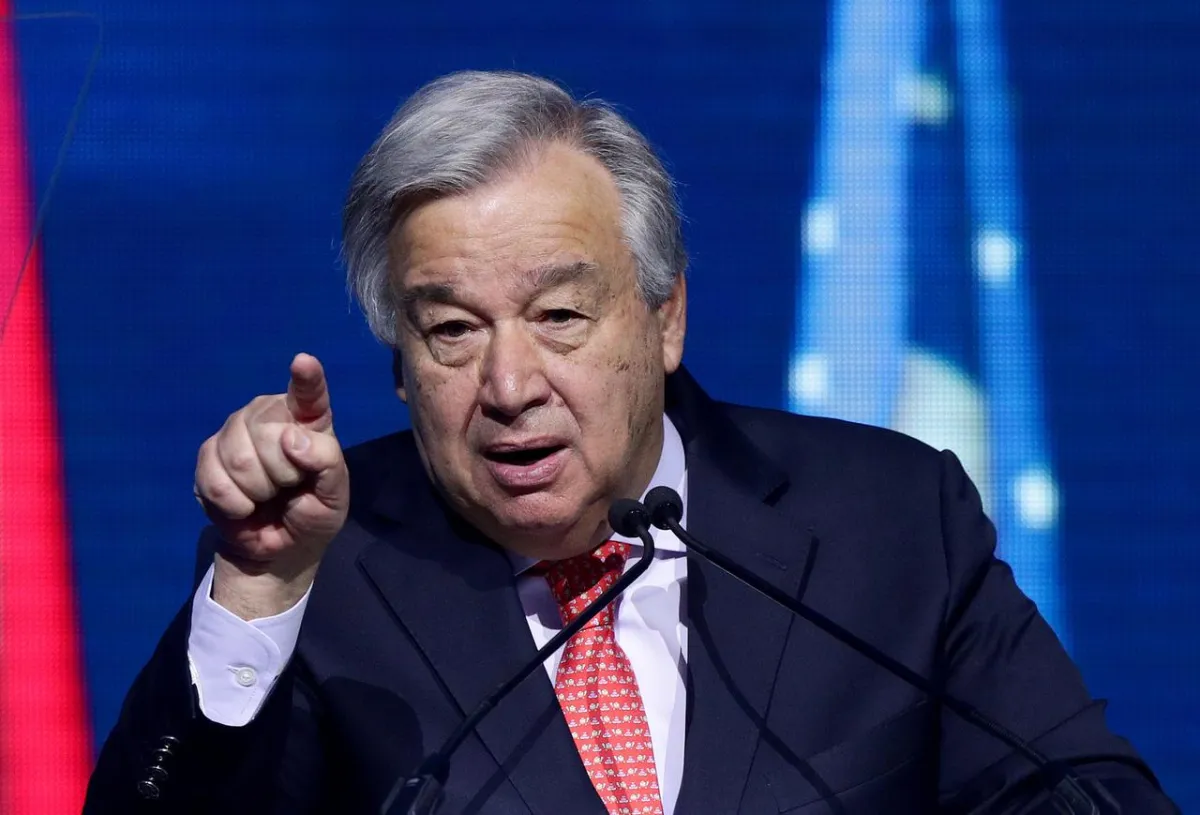
The United Nations doesn't usually move this fast without a massive fire under its seat. When Secretary-General António Guterres appointed Jean Arnault as his personal envoy for the Middle East war, it wasn't just another bureaucratic shuffle. It was a signal. The world is exhausted by the current stalemate, and the old playbooks have clearly failed. If you’ve been following the regional collapse, you know the standard diplomatic channels are clogged with historical baggage and vetoes. Arnault entering the fray changes the math.
This isn't just about adding another name to a press release. The Middle East is currently a powder keg where traditional mediation has hit a brick wall. Guterres knows it. We all know it. By tapping a veteran like Arnault, the UN is trying to bypass the usual noise. They need someone who speaks the language of back-channel deals and long-term stabilization, not just someone to hold a microphone at a press conference in Geneva or New York.
The Strategy Behind the Arnault Appointment
Choosing a personal envoy is a specific power move for a UN Secretary-General. Unlike a Special Representative who might be bogged down by a massive mission infrastructure, a personal envoy has more room to breathe. They report directly to the boss. They can move quietly. Arnault has spent decades in the trenches of international conflict, from the mountains of Afghanistan to the jungles of Colombia. He isn't a career politician looking for a promotion. He's a fixer.
The Middle East war has reached a point where the "day after" plans are more important than the daily skirmishes. Everyone is asking who will govern, who will rebuild, and who will keep the peace when the guns finally go silent. Arnault's background in transitional justice and peace implementation is exactly why he’s there. He doesn't just look at the ceasefire; he looks at the decade following it.
Why Experience in Colombia and Afghanistan Matters Here
You might wonder what a guy who worked on South American peace deals has to do with the Levant. Everything. Peace isn't about geography; it's about the mechanics of trust. In Colombia, Arnault dealt with guerilla groups and a government that had been killing each other for half a century. He learned how to get people who hate each other into the same room—or at least into the same building.
The Middle East presents a similar, albeit more complex, lack of trust. The current conflict involves non-state actors, regional superpowers, and a civilian population that has lost faith in international law. Arnault’s "boots on the ground" experience means he’s less likely to be fooled by the posturing that usually happens in high-level summits. He knows that the real work happens in the side rooms, away from the cameras.
Breaking the Cycle of Failed Mediations
We've seen dozens of "peace plans" crumble over the last few years. Usually, they fail because they’re too top-down. They ignore the local power dynamics. Arnault’s track record suggests he favors a more granular approach. He understands that you can't impose a solution from a skyscraper in Manhattan. You have to map out the grievances of every faction, no matter how small or "difficult" they are perceived to be.
The Geopolitical Hurdles Facing the New Envoy
Let’s be real. Arnault is walking into a meat grinder. The major powers on the Security Council aren't exactly on the same page. You have the U.S. providing military support on one side, while other members call for immediate, unconditional halts to operations. It’s a mess.
- Regional Interference: Every neighbor has a stake. None of them want a vacuum, but they all want a different kind of order.
- The Humanitarian Crisis: You can't talk politics when people are starving. Arnault has to balance the immediate need for aid with the long-term political roadmap.
- Political Instability: The internal politics of the parties involved are volatile. Leaders are fighting for their own survival, not just their nations.
Arnault’s job isn't to solve all of this by Tuesday. His job is to find the one thread that everyone can agree to pull. Sometimes that’s as simple as a localized pause or a specific corridor for supplies. Small wins lead to bigger conversations.
What This Means for Global Stability in 2026
The timing of this appointment is everything. We are seeing a shift in how international bodies handle "forever wars." The old method of sending a high-profile politician is being replaced by sending technical experts in peace-building. It's a move toward pragmatism over optics. If Arnault can even move the needle an inch, it proves that the UN still has a role to play in a world that is increasingly skeptical of its relevance.
Many critics argue the UN is a relic. They say it’s toothless. But when a crisis hits this level of intensity, there is literally no other entity that can provide the legal framework for a legitimate peace. Arnault is the personification of that framework. He represents the "international community," even if that community is currently fractured.
The Realistic Outlook
Don't expect a signed treaty by next month. That’s not how this works. Expect a lot of "shuttle diplomacy." Expect Arnault to spend more time on planes than in his office. His success won't be measured by headlines, but by the absence of them—meaning, the quiet stabilization of areas that are currently chaotic.
The biggest mistake anyone can make is thinking this is just "business as usual." Guterres is playing one of his last big cards here. If Arnault can't find a path forward, it’s hard to see who could.
To stay informed on how this impacts global markets and regional security, you should track the specific mandates given to Arnault’s office over the next ninety days. Watch for changes in how humanitarian aid is coordinated. That will be the first real test of his influence. Follow the official UN press briefings, but pay closer attention to the reports coming out of regional capitals like Cairo and Amman. That’s where the real reaction to Arnault’s movements will be felt. Don't just watch the war; watch the architecture being built to end it.