The survival of a street circuit in a major North American metropolitan area depends on a precise calibration of political capital, logistical efficiency, and economic integration. Most temporary racing venues fail within five years due to the "host city exhaustion" effect, where the friction of urban disruption outweighs the measurable tax revenue. Jim Michaelian, as the chief architect and longtime president of the Long Beach Grand Prix, engineered a structural exception to this rule. His tenure, ending at age 83, provides a quantitative blueprint for how a niche sporting event can be transformed into a permanent pillar of municipal infrastructure.
The Triple Constraint of Street Circuit Viability
To understand why the Long Beach Grand Prix survived while dozens of other "Pop-up" races—from Meadowlands to Baltimore—collapsed, one must analyze the three specific variables Michaelian managed:
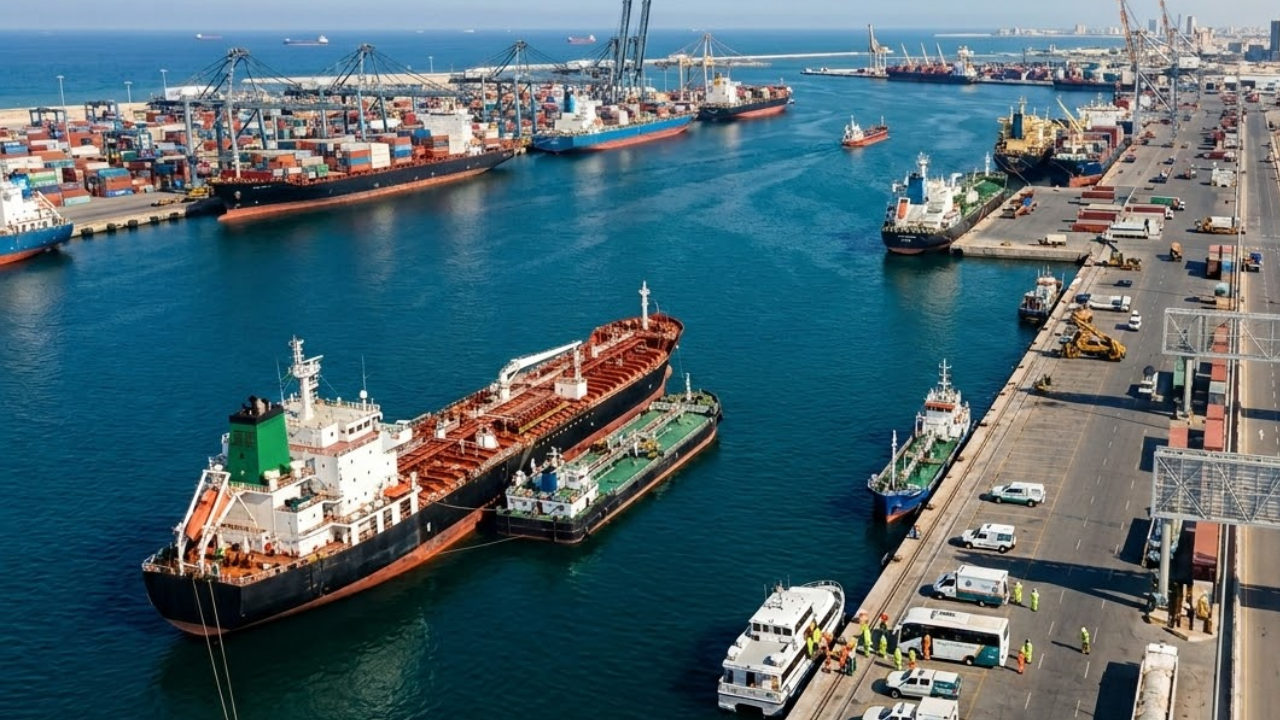
- Logistical Amortization: The cost of transforming public roads into a FIA-sanctioned Grade 2 circuit is immense. Michaelian optimized the "build-and-tear-down" cycle, reducing the disruption window for local businesses from months to weeks. This was achieved through a proprietary sequence of concrete barrier placement and pedestrian bridge installation that minimized the impact on the Port of Long Beach—the second-busiest container port in the United States.
- Stakeholder Diversification: Michaelian shifted the event's reliance from a single racing series to a multi-platform "speed week" model. By layering IndyCar, IMSA sports cars, drifting, and historic racing, he ensured that the event’s overhead was subsidized by multiple fan bases and manufacturer marketing budgets.
- The Municipal Dividend: The race serves as a 1.97-mile marketing brochure for the city. Michaelian maintained the event's status not as a sports contract, but as a community development tool. This prevented the common pitfall where city councils view race promoters as extractive entities.
The Economic Engine of the Waterfront
The financial stability of the Long Beach Grand Prix rests on a revenue mix that resists the volatility of the broader sports market. While many modern races rely heavily on government subsidies, Michaelian’s model prioritized private-sector integration.
The Sponsorship Anchor
Long Beach avoided the "title sponsor churn" that plagues the Indianapolis 500 or the Miami Grand Prix. By securing long-term partnerships—most notably with Toyota for four decades and later Acura—Michaelian created a predictable cash flow. This allowed the Grand Prix Association of Long Beach to invest in permanent assets, such as specialized paving materials and safety fencing, rather than renting them at a premium every year.
The Footfall Multiplier
Data from the Long Beach Convention and Visitors Bureau indicates that the event generates an annual economic impact exceeding $60 million. However, the raw number is less significant than the velocity of that capital. The race occupies a specific "shoulder season" in the tourism calendar, filling hotel rooms during a period that would otherwise see lower occupancy. Michaelian’s strategy involved a "total site" approach, where the Long Beach Convention Center was utilized as an indoor lifestyle expo, effectively doubling the usable square footage of the event without expanding the physical track footprint.
Operational Friction and the Frictionless Solution
The primary threat to any street race is the "NIMBY" (Not In My Backyard) variable. Local residents and business owners often view the noise and traffic as a net negative. Michaelian solved this through a rigorous feedback loop.
The "Circuit Build" is a masterclass in industrial engineering. It involves the placement of more than 2,400 concrete blocks, totaling 14,000 tons. Michaelian’s team developed a phased construction schedule that allowed the city’s major arteries to remain open during peak hours until 72 hours before the green flag. This operational efficiency is the "invisible product" that Michaelian sold to the city year after year. If the build took 10% longer, the political cost would likely have risen by 50%, eventually making the race untenable.
Risk Mitigation in a High-Volatility Industry
The transition from Formula 1 to IndyCar in 1984 is often cited as a moment of crisis, but from a strategic standpoint, it was a move toward fiscal sustainability. Formula 1's escalating sanctioning fees—often reaching $20 million to $50 million in modern terms—create a precarious break-even point. Michaelian recognized that the event was the brand, not the specific racing series.
By pivoting to the CART (now IndyCar) series, he lowered the cost of goods sold while maintaining the "Monaco of the West" prestige. This decision decoupled the event’s survival from the global politics of the FIA and Bernie Ecclestone, placing control back into the hands of the local promoters. This move highlights a fundamental principle in sports management: Control the venue, and you control the leverage.
The Human Capital Factor
Michaelian’s leadership style was characterized by a lack of "event-day ego." While other promoters often seek the spotlight, his focus remained on the technical and relational aspects of the operation. He maintained a staff with decades of institutional knowledge, a rarity in a field often defined by high turnover and seasonal contractors.
This continuity ensured that the "institutional memory" of the race—how to handle a sudden rainstorm in a coastal microclimate or how to manage a security breach on a public sidewalk—was never lost. The reliability of the Long Beach Grand Prix is, in many ways, a function of this low-turnover environment.
The Structural Legacy of the 1.97-Mile Loop
The physical constraints of the Long Beach circuit are its greatest strengths. The 11-turn layout is designed for maximum spectator visibility. Unlike purpose-built tracks where fans are often hundreds of yards from the action, the urban canyon of Long Beach creates an intimacy that translates well to television and social media.
This "stadium-effect" within a city grid is difficult to replicate. Many newer street races (such as the Las Vegas Grand Prix) prioritize long straights for top speed, but Michaelian prioritized the "flow" of the spectator experience. He understood that a race fan who can see, hear, and feel the cars from a downtown balcony is a fan who will return, regardless of who wins the race.
The Strategic Path Toward Perpetual Viability
The death of Jim Michaelian marks the end of an era, but the "Michaelian Framework" remains the industry standard for urban sports events. For a street circuit to survive the next twenty years of electrification and shifting media consumption habits, it must adopt three specific protocols established during his tenure:
- Infrastructure Dual-Use: The barriers, fences, and bridges must be viewed as municipal assets that can be deployed for other events, reducing the total cost of ownership for the city.
- Hyper-Local Integration: The race must be a "Long Beach" event first and a "Racing" event second. This requires deep ties with local non-profits and schools, creating a multi-generational buy-in that makes the event "uncancelable."
- Financial Agility: Promoters must be willing to swap racing series or sponsors to protect the underlying health of the event, rather than being wedded to a specific brand identity.
The Long Beach Grand Prix is not merely a race; it is a successful experiment in urban land use. The most critical action for the current board of the Grand Prix Association is to codify Michaelian’s informal relationship-based governance into a formal operational manual. They must ensure that the "Build-to-Revenue" ratio remains below the threshold of municipal irritation. Failure to maintain this balance will result in a rapid erosion of the political goodwill that took 50 years to construct. The focus must remain on the logistics of the city as much as the physics of the cars.