Artemis II represents the transition from automated verification to human-in-the-loop systems validation within a deep-space environment. While Artemis I proved the structural integrity of the Space Launch System (SLS) and the thermal performance of the Orion heat shield, Artemis II shifts the objective to the physiological and operational limits of a four-person crew over a high-altitude, multi-day trajectory. This mission is not a victory lap for the moon; it is a critical stress test of the Environmental Control and Life Support System (ECLSS) and the manual piloting interfaces required for future lunar orbital insertion.
The Strategic Selection Matrix: Crew Composition as a Risk Mitigation Tool
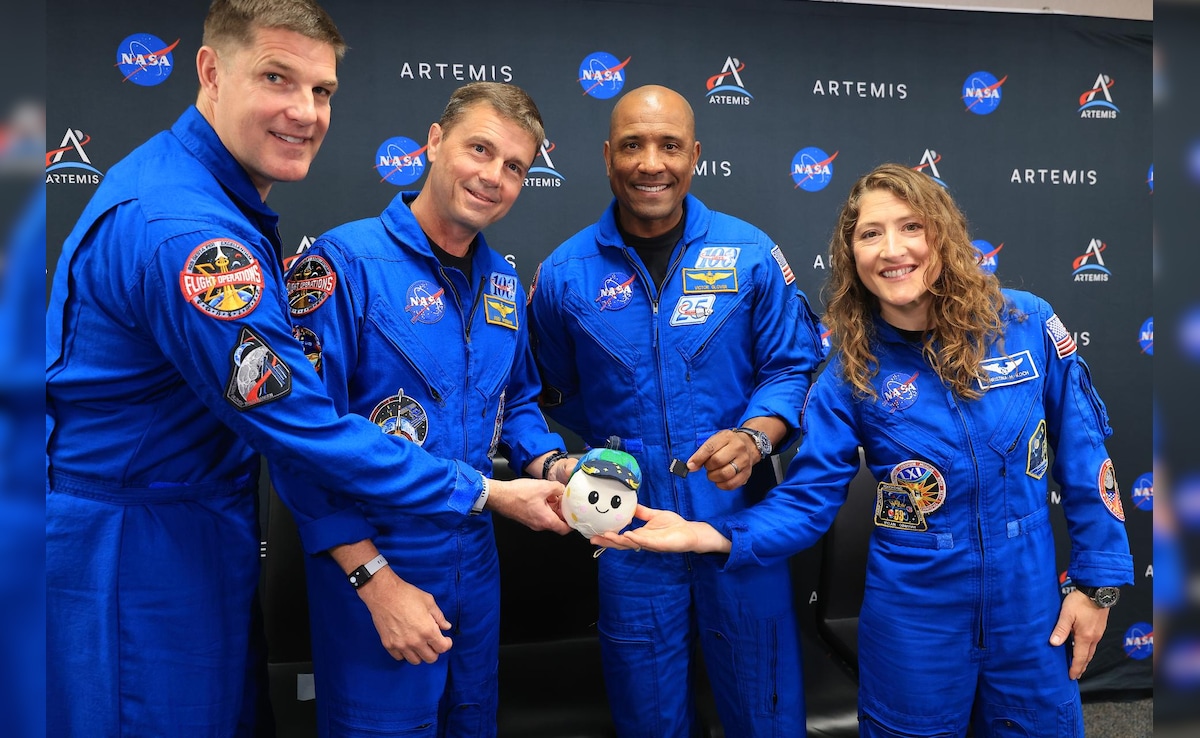
NASA’s selection of Reid Wiseman, Victor Glover, Christina Koch, and Jeremy Hansen serves a functional purpose beyond mere representation. The crew is a cross-disciplinary team engineered to handle specific failure modes of the Orion spacecraft.
- Operational Command and Flight Dynamics: Reid Wiseman (Commander) and Victor Glover (Pilot) bring high-performance flight backgrounds—Glover specifically having piloted the SpaceX Crew-1 mission. Their presence addresses the "manual takeover" requirement. If the automated guidance, navigation, and control (GN&C) systems fail during the Trans-Lunar Injection (TLI), human intervention becomes the only redundancy.
- Systems Engineering and Mission Durability: Christina Koch (Mission Specialist) holds the record for the longest single spaceflight by a woman. Her inclusion is a hedge against the psychological and physiological degradation associated with high-radiation environments.
- Inter-Agency Synergy: Jeremy Hansen (Mission Specialist) represents the Canadian Space Agency (CSA). His presence is the physical manifestation of the Artemis Accords—a geopolitical framework that distributes the multi-billion dollar cost of lunar exploration across a coalition of nations, thereby ensuring long-term funding stability that a single-nation program might lack.
The Hybrid Free Return Trajectory: Engineering Safety into Orbital Mechanics
The Artemis II flight path utilizes a Hybrid Free Return Trajectory, a specific orbital design that leverages the moon’s gravity as a natural failsafe. Unlike the Apollo-style Lunar Orbit Insertion (LOI), Artemis II will not enter a circular orbit around the moon.
The mission starts with a High Earth Orbit (HEO). The SLS Block 1 rocket launches the Orion into a 24-hour orbit. This phase is the primary verification window for the ECLSS. Before committing to the TLI burn, the crew must confirm that the carbon dioxide scrubbing systems and thermal regulation loops are functioning within nominal parameters.
Once the TLI burn occurs, the spacecraft enters a trajectory that carries it roughly 10,300 kilometers past the lunar far side. Physics dictates that the moon's gravitational well will pull the Orion around and "sling" it back toward Earth. If the primary propulsion system fails after this point, the crew returns to Earth via passive gravitational force. This design eliminates the risk of being stranded in lunar orbit, a critical constraint for the first crewed flight of a new vehicle architecture.
The Life Support Bottleneck: Quantifying Survival in Deep Space
The primary technical hurdle for Artemis II is the transition from "Short-Duration" to "Deep-Space" life support. On the International Space Station (ISS), the ECLSS relies on a constant resupply of consumables and a relatively stable low-Earth orbit (LEO) radiation environment. Artemis II moves beyond the protective shielding of the Van Allen belts.
Atmospheric Composition and Scrubbing
The Orion spacecraft must maintain a precise balance of nitrogen and oxygen. The primary risk is the accumulation of $CO_2$. Artemis II utilizes the Amine Swingbed system, which removes $CO_2$ and water vapor from the cabin air. Unlike the lithium hydroxide canisters used in earlier eras, this system is regenerative, though its performance in the specific vibration and thermal conditions of an SLS launch remains a theoretical model until this mission confirms it.
Thermal Regulation Flux
Spacecraft temperatures fluctuate wildly based on orientation toward the sun. The Orion’s Service Module, provided by the European Space Agency (ESA), uses a series of radiators and heat exchangers to move internal heat generated by electronics and crew metabolism into the vacuum of space. The delta-T (temperature difference) between the sun-facing side and the shadow-facing side of the craft can exceed 200 degrees Celsius, requiring a sophisticated fluid loop system that must operate without interruption for the 10-day mission duration.
The Radiation Challenge: The Van Allen Transit
The mission requires two transits through the Van Allen radiation belts. These regions contain high-energy protons and electrons trapped by Earth's magnetic field. While the Orion's hull provides a baseline level of shielding, the crew will encounter Solar Particle Events (SPEs).
To mitigate this, the Orion is designed with a "shelter" concept. In the event of a solar flare, the crew will move to the center of the cabin and use stowage bags filled with water and food as additional mass shielding. The effectiveness of this makeshift shield is a major data point for Artemis II, as it informs the design of the Lunar Gateway and the Artemis III landing craft.
Manual Proximity Operations: The Proximity Operations Demonstration (POD)
A secondary but vital objective of Artemis II is the POD. After separating from the Interim Cryogenic Propulsion Stage (ICPS), the crew will use the Orion’s onboard thrusters to fly close to the spent stage.
This is not for photography. It is a validation of the spacecraft's handling qualities. Pilots need to understand the "control feel" of the Orion—how the mass of the vehicle reacts to pulse-firing the reaction control system (RCS). This data is the prerequisite for the complex docking maneuvers required in Artemis III, where the Orion must dock with a SpaceX Starship HLS (Human Landing System) or the Lunar Gateway.
The Economic and Geopolitical Cost Function
The SLS launch costs approximately $2.2 billion per flight. When amortized with the development costs of Orion and the ground systems at Kennedy Space Center, the price per seat on Artemis II exceeds $1 billion.
Critics argue that this expendable architecture is obsolete in an era of reusable rocketry. However, the Artemis program’s value is not found in its launch efficiency, but in its strategic positioning. By establishing the Artemis Accords, the United States has created a legal and operational framework for lunar resource extraction and "safety zones." Artemis II is the physical enforcement of this framework. It demonstrates the capability to put humans in the lunar vicinity, which is the ultimate currency in space diplomacy.
Data Acquisition and Sensor Suites
The spacecraft is equipped with thousands of sensors designed to measure:
- Acoustics and Vibration: Mapping the "ride quality" of the SLS to ensure future crews do not suffer from physical disorientation during the ascent phase.
- Dosimetry: Multiple internal and external sensors to map the exact radiation dose received at different points in the cabin.
- Structural Strain: Monitoring the integrity of the pressure vessel during the high-G reentry phase.
Reentry occurs at approximately 11,000 meters per second. The heat shield must withstand temperatures of nearly 2,760 degrees Celsius. The skip-reentry maneuver—where the capsule "bounces" off the atmosphere to bleed off velocity—will be tested with humans aboard for the first time in this vehicle. This maneuver allows for a more precise splashdown location and reduces the peak G-loads on the crew, a necessary optimization for astronauts who may be physically weakened after a long-duration mission.
Strategic Forecast: The Shift from Exploration to Occupation
The success of Artemis II will be measured by the fidelity of the data returned, not just the safe recovery of the crew. If the ECLSS data shows higher-than-expected $CO_2$ accumulation or if the radiation shielding proves insufficient, the Artemis III landing will be delayed by a minimum of 24 months to allow for hardware redesign.
The immediate strategic play following splashdown is the rapid iteration of the Lunar Gateway modules. Artemis II proves the transport vehicle; the focus then shifts to the destination. Investors and aerospace contractors should monitor the "Environmental Control" data specifically. Any deviation from the predicted performance in the Amine Swingbed systems will signal a pivot toward more robust, possibly heavier, life-support architectures, which would impact the payload capacity for scientific instruments on future missions.
The mission is the final barrier between the theoretical "can we go" and the practical "how will we stay." Once the Orion’s systems are human-rated in deep space, the lunar surface moves from a target for observation to a theater for industrial and scientific operations.