Angola is not becoming a Francophone hub. Despite the breathless reporting surrounding the introduction of mandatory French in primary schools, the move is less about linguistic fluency and more about a desperate, calculated pivot toward the CEMAC zone. The "lazy consensus" suggests this is a cultural awakening or a bridge to global diplomacy. In reality, it is a logistical nightmare that will likely result in a generation of students who can barely order a croissant while their core STEM competencies continue to erode.
I have spent years watching African ministries of education sign grand decrees that look spectacular on a press release but crumble the moment they hit a rural classroom. This policy is no different. It ignores the crushing reality of teacher shortages and the stubborn dominance of Portuguese and local Bantu languages.
The Myth of the Francophone Bridge
The prevailing narrative argues that by teaching French, Angola opens the door to its neighbors—Congo-Brazzaville, the DRC, and Gabon. This sounds logical in a boardroom in Luanda. It fails the moment you look at the data.
Language acquisition in a vacuum does not create economic integration. Trade is driven by infrastructure, tariff alignment, and currency stability. Adding French to the curriculum of a ten-year-old in Luena does not magically pave the road to Kinshasa. The DRC, for instance, is already Angola's largest African export market. They managed that through oil and basic necessity, not through a shared appreciation for Molière.
If the goal is regional dominance, the focus should be on English—the actual language of Southern African Development Community (SADC) business—or strengthening the domestic technical workforce. Diversion of resources into a secondary foreign language at the primary level is a luxury an emerging economy cannot afford.
Education as a Zero-Sum Game
Every hour a child spends struggling with French conjugation is an hour taken away from literacy in their primary language or foundational mathematics. In Angola, the proficiency rates in basic Portuguese and math are already alarming.
- The Teacher Deficit: Where are these thousands of French teachers coming from? You cannot conjure a qualified, pedagogical workforce out of thin air.
- The Quality Slide: Most "mandatory" language programs in resource-strapped nations result in "placeholder teaching," where instructors who are barely B1-level themselves pass down incorrect grammar and pronunciation.
- The Infrastructure Gap: Textbooks, digital resources, and testing frameworks cost millions. That capital is being sucked away from vocational training that could actually lower the youth unemployment rate.
The government is effectively trying to install a high-end sound system in a house that doesn't have a roof. It looks good from the street, but everyone inside is still getting wet.
The Hidden Geopolitical Play
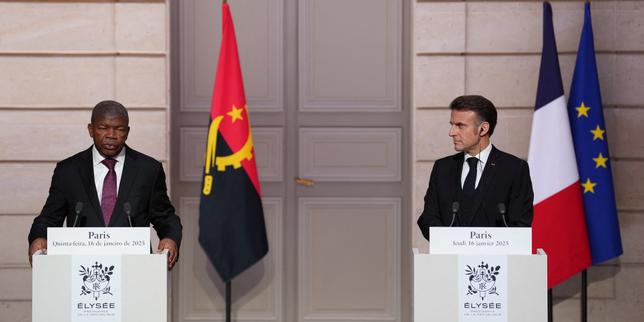
Why do this now? It isn't about the kids. It’s about the African Union and the shifting power dynamics within the continent. President João Lourenço is repositioning Angola as the ultimate mediator. To lead the "Great Lakes" region or to challenge the traditional hegemony of South Africa and Nigeria, he needs a "neutral" linguistic profile.
By adopting French, Angola signals to Paris and the Francophone bloc that it is open for business and ready to serve as a bridge. It is a diplomatic maneuver masquerading as an educational reform. The students are being used as pawns in a long-term play for a seat at the table in organizations where French is still a dominant working language.
Is This a Post-Colonial Pivot?
Some argue this is a move to distance Angola from its Portuguese colonial past. That is a fundamental misunderstanding of the Lusophone identity. Portuguese is the glue that holds Angola’s diverse ethnic groups together. It isn’t going anywhere. Layering French on top doesn't "decolonize" the mind; it complicates the national identity with yet another European import, often at the expense of indigenous languages like Umbundu or Kimbundu.
If the state truly wanted to "disrupt" the status quo, it would prioritize bilingual education in native tongues and English. That would provide both cultural grounding and a global competitive edge. French is a retreat into the 20th century.
The Implementation Trap
Imagine a scenario where a school in Uíge receives a crate of French textbooks but has no electricity, no internet, and a teacher who has only ever heard French on the radio. This is the reality for the majority of the Angolan interior.
When you make a language mandatory, you create a bottleneck for graduation. If a student fails French, do they fail the year? If so, you’ve just created a massive, artificial barrier to entry for the workforce. If you don't make it a requirement for passing, then the "mandatory" label is a lie. It becomes a "zombie subject"—one that exists on the schedule but provides no value.
The Economic Miscalculation
The "Francophone market" is often cited as a reason for this shift. Let’s look at the numbers. The combined GDP of the neighboring Francophone states is a fraction of the global English-speaking market or even the emerging Lusophone trade corridors.
Investing in French is an investment in a stagnant or slowly growing bloc. It ignores the tech-heavy, English-dominant sectors that Angola needs to diversify its oil-dependent economy. Software development, fintech, and global logistics don't run on French; they run on Python and English.
| Language Focus | Economic Justification | Reality Check |
|---|---|---|
| French | Regional integration with neighbors. | Trade is blocked by borders/tariffs, not verbs. |
| English | Global finance and tech access. | High barrier to entry, but massive ROI. |
| Indigenous | National identity and primary literacy. | Hard to scale, but vital for cognitive development. |
The Brutal Truth
Angola’s elite already speak French. They learned it in private schools or while living in exile during the civil war. By making it mandatory for the masses, the government isn't "democratizing" the language; it is creating a facade of progress.
Real progress looks like 100% literacy in the national language. It looks like world-class vocational schools. It looks like a curriculum that prepares a kid from Benguela to compete with a kid from Bangalore.
This policy is a distraction. It is a shiny object designed to win points in Brussels and Paris while the foundational cracks in the national school system continue to widen. We are watching a country trade its students' time for a seat at a diplomatic cocktail party.
Stop pretending this is about education. It's about optics. And the children will be the ones to pay the bill.
Burn the textbooks and hire some math teachers.