The air in Delhi during late March has a specific weight to it. It is the period where the biting chill of January has finally surrendered to a restless, dusty warmth. People are out. They are buying marigolds for weddings, haggling over the price of king-size mattresses in Kirti Nagar, and rushing to catch the Yellow Line Metro. Life is loud. It is chaotic. It is aggressively, stubbornly alive.
Across the border, in the hushed, manicured corridors of Islamabad’s diplomatic circles, a different kind of air circulates. It is thin. It is cold. It is the air of men who have spent decades weighing the lives of millions against the geometry of maps and the ego of states.
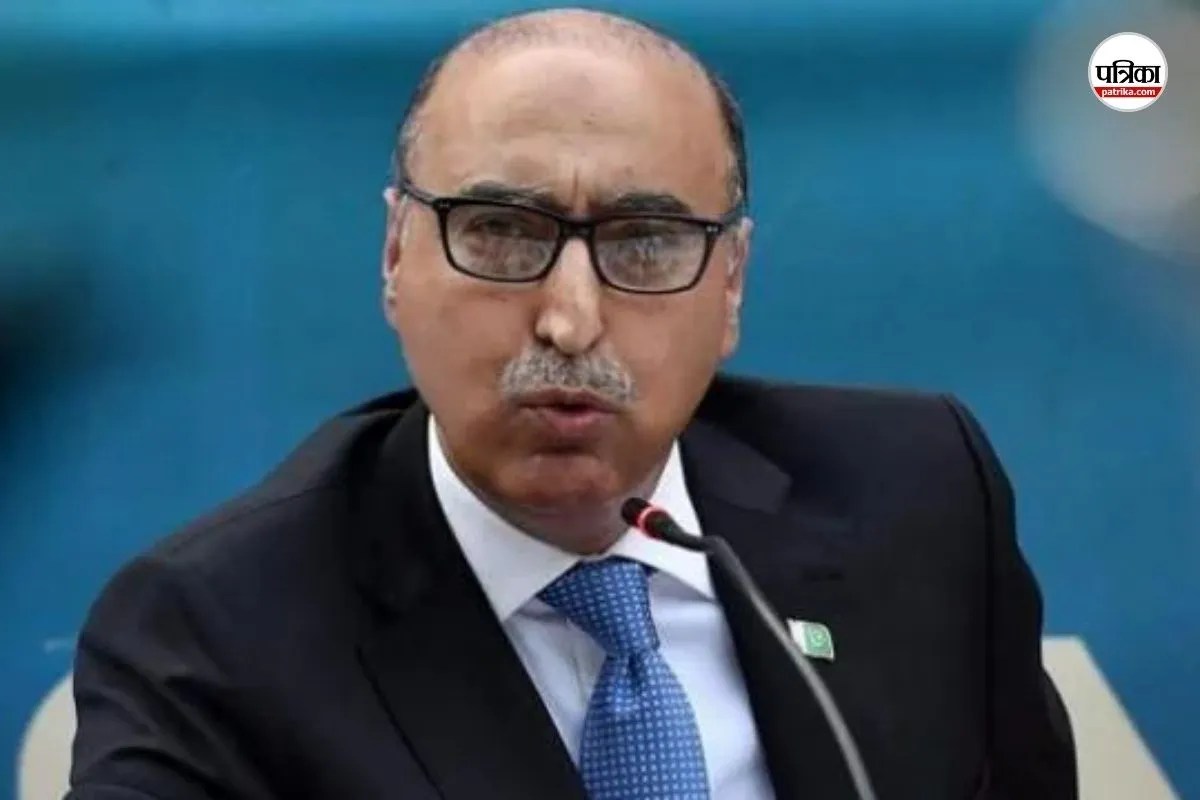
When Abdul Basit, Pakistan’s former High Commissioner to India, sat down for a recent interview, he didn't just speak. He dropped a match into a powder keg that many hoped had finally grown damp with time. His suggestion was not veiled in the usual bureaucratic "diplomat-speak" that cushions the blow of hostility. It was a jagged, naked assertion: Pakistan should consider dropping bombs on Delhi and Mumbai.
Imagine, for a fleeting moment, a woman named Sunita. She is hypothetical, but she represents millions. Sunita is sitting in a roadside cafe in Mumbai’s Colaba, watching the waves hit the pier. She is thinking about her daughter’s tuition fees. She is not thinking about nuclear doctrine. She is not thinking about the 1947 Partition or the 1999 Kargil conflict. She is simply existing in the sun.
To a diplomat sitting in a secure studio, Sunita is a statistic. To the bomb, she is a thermal unit. To the rest of us, she is the heartbeat of a nation.
The Weight of a Word
Words are not merely sounds. In the context of India-Pakistan relations, words are kinetic. They have mass. When a man of Basit’s former stature—a man who once represented his nation’s interests in the very heart of New Delhi—suggests the annihilation of that city, the social fabric doesn't just tear. It burns.
The reaction in India was instantaneous. A mixture of weary disgust and sharp, jagged anger. It wasn't just the threat itself; it was the casual nature of it. The suggestion that the most densely populated urban centers on the planet should be targeted as a matter of strategic "correction" is a glimpse into a psyche that has replaced human empathy with a cold, mathematical nihilism.
But why now? Why does a retired diplomat reach for the ultimate "reset button" in a public forum?
The answer lies in the crumbling architecture of relevance. For decades, the "Kashmir issue" was the primary currency of Pakistani diplomacy. It was the lens through which they viewed the world. But the world moved on. India’s economy surged, its global alliances shifted, and the geopolitical gravity of South Asia centered firmly in New Delhi. When you lose your seat at the table, sometimes the only way to get people to look at you is to scream that you’re going to flip the table over.
The Invisible Stakes
We often talk about war in terms of "strikes" and "counter-strikes," as if we are playing a game of chess on a digital screen. We forget the smell of burning rubber. We forget the sound of glass shattering across a four-mile radius.
If a bomb were to drop on Delhi, it wouldn't just be an attack on a government. It would be an attack on history. It would be the vaporizing of the Red Fort, the silencing of the bustling markets of Chandni Chowk, and the erasure of the archives that hold the story of a civilization.
Basit’s rhetoric relies on a dangerous metaphor: that a nation is a singular, monolithic enemy. It ignores the reality that Delhi and Mumbai are tapestries of human struggle. They are cities where Pakistani singers have found fame, where divided families still hope for a visa, and where the ghosts of a shared past refuse to stay buried.
Consider the logistical nightmare of such a threat. A strike on Mumbai is not just a strike on India; it is a strike on the global economy. It is an attack on the shipping lanes of the Arabian Sea and the financial nerves that connect the East to the West. The fallout—both literal and metaphorical—would not stop at the border. Radiation does not carry a passport. It does not recognize the Radcliffe Line. A wind blowing west would bring the poison back to the very doorsteps of those who unleashed it.
The Psychology of Provocation
There is a specific kind of desperation that colors these statements. To understand it, we must look at the internal pressures facing Pakistan. The country is grappling with an economic crisis that borders on the existential. Inflation has stripped the dignity from the middle class. Political instability has turned the halls of power into a revolving door of accusations.
In this environment, the "India card" is the ultimate distraction. It is a shot of adrenaline to a weary populace. By invoking the image of a mushroom cloud over Delhi, speakers like Basit attempt to reclaim a sense of power that their domestic reality currently denies them. It is a phantom strength.
But the cost of this rhetoric is paid by the youth.
Think of a young student in Lahore, scrolling through his phone, seeing these headlines. He is taught that his neighbor is a monster that must be destroyed. Simultaneously, an Indian teenager sees the same clip and feels a hardening of the heart. The "invisible stakes" are the minds of the next generation. Every time a diplomat speaks of bombs, he sows a field of salt where nothing communal can ever grow again.
The Mirror of History
This isn't the first time we've walked this tightrope. The history of the subcontinent is a long series of "almosts." Almost a peace treaty. Almost a trade agreement. Almost a nuclear exchange.
The 2001 Parliament attack, the 2008 Mumbai siege, the 2019 Pulwama strike—each of these moments brought the world to a standstill. In each instance, the rhetoric reached a fever pitch. But there was always a backchannel. There were always cooler heads, often in the military or the intelligence wings, who understood that the "final solution" Basit suggests is actually a suicide pact.
The danger of Basit’s statement isn't that it represents official policy—the Pakistani government has its hands full with its own survival—but that it normalizes the unthinkable. It moves the goalposts of what is acceptable to say in a civil society. When mass murder becomes a "strategic option" discussed in an interview, the floor of human decency has dropped out.
The Silence of the Streets
Walk through Mumbai at midnight. The city never truly sleeps, but it hums. You will see the delivery boys on their scooters, the night-shift nurses waiting for the bus, and the street-food vendors cleaning their woks.
There is a profound silence from these people regarding the threats of diplomats. It isn't that they aren't afraid; it’s that they are too busy living to indulge in the fantasy of destruction. They understand something that the men in the high-ceilinged rooms of Islamabad seem to have forgotten: that a city is not a target. A city is a promise.
It is a promise that tomorrow will be slightly better than today. It is a promise that if you work hard enough, your children won't have to sleep on the floor. Basit’s words are a direct assault on that promise.
We must ask ourselves: what remains after the bomb?
If the goal is "victory," what does victory look like in a landscape of ash? Does the victor rule over the shadows? Does the diplomat feel proud of the silence he has created?
The reality is that India and Pakistan are like two people trapped in a small, dark room, each holding a grenade. One person screaming that they should pull the pin doesn't make them brave. It makes them a threat to the very air both are breathing.
As the news cycle moves on and Basit’s comments are buried under the next scandal or the next cricket score, the residue remains. It sits in the back of the mind of every traveler, every businessman, and every mother. It is a reminder that peace is not the absence of war, but the presence of a choice.
Every day that a bomb is not dropped on Delhi or Mumbai is a victory for the Sunita's of the world. It is a victory for the mundane, the ordinary, and the beautiful struggle of existing. The diplomats may have their maps and their missiles, but the streets have their stories. And as long as the stories continue, the bombs have already failed.
The sun sets over the Arabian Sea, painting the Mumbai skyline in shades of bruised purple and gold. The commuters continue their journey home, shoulder to shoulder, a sea of humanity that refuses to be reduced to a coordinate on a targeting system. They are the living answer to a dying rhetoric.