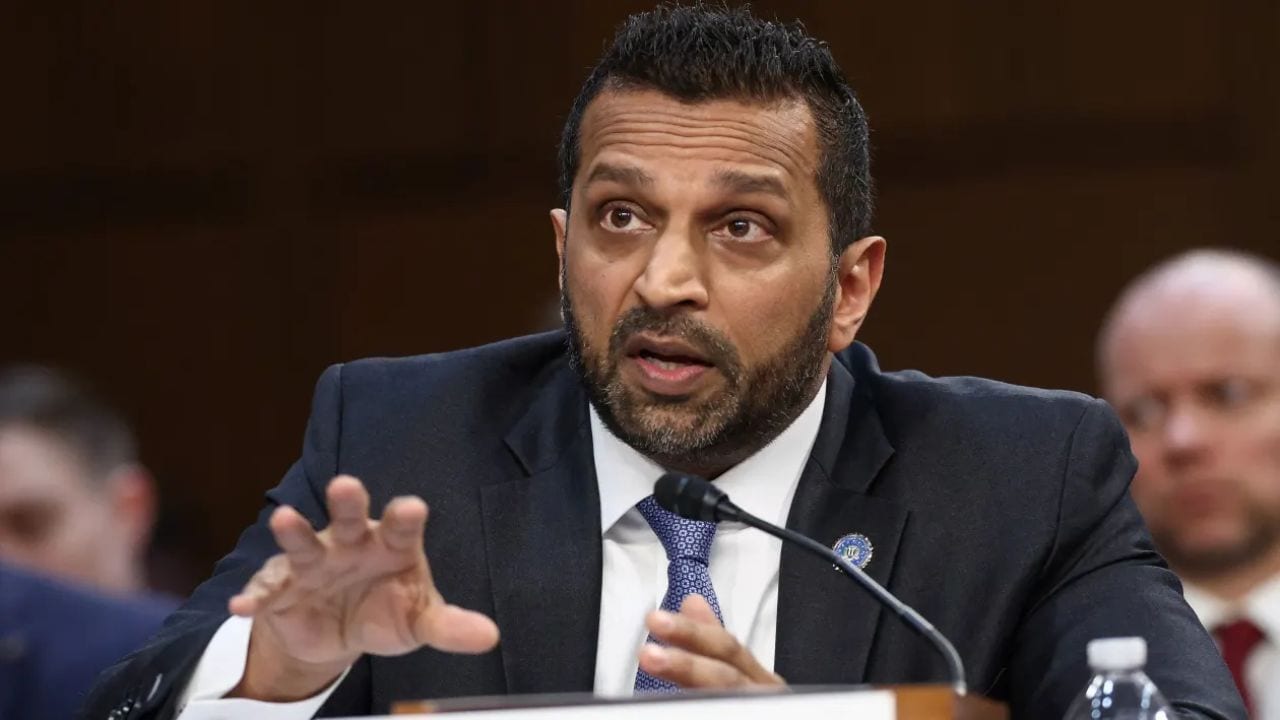
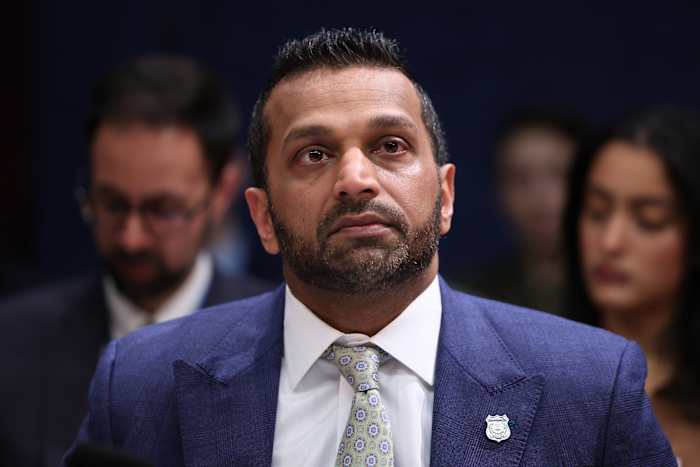
The breach of personal communications belonging to a high-ranking intelligence official—in this case, FBI Director Kash Patel—is not merely a failure of individual digital hygiene; it is a calculated execution of a Compromise-and-Amplify (C&A) strategy. While the surface-level narrative focuses on the sensationalism of "leaked photos," a rigorous analysis reveals a deeper objective: the systematic erosion of institutional trust through the targeted exploitation of the Personal-Professional Boundary. This incident serves as a blueprint for how state-linked actors, specifically those associated with Iranian interests, transition from simple data exfiltration to psychological warfare.
The Three Pillars of Targeted Attribution
To understand the mechanics of this breach, one must look past the identity of the victim and examine the functional intent behind the hackers' actions. The operation rests on three distinct pillars: Recently making headlines in related news: The Polymer Entropy Crisis Systems Analysis of the Global Plastic Lifecycle.
- Informational Asymmetry: The attackers possess data that the target cannot easily debunk without acknowledging the breach's extent. By publishing "photos" as proof-of-life for the hack, the actors establish immediate credibility.
- Psychological Leverage: By targeting personal emails rather than encrypted government channels, the actors exploit the weakest link in the security chain to humiliate the individual and, by extension, the agency they lead.
- Narrative Seeding: The leak is timed to coincide with political transitions or policy shifts, ensuring that the stolen data becomes a permanent fixture in the public discourse surrounding the official’s fitness for office.
The technical barrier for entry in such attacks is often lower than the public perceives. While "hacking" implies complex zero-day exploits, the reality frequently involves Session Hijacking or Credential Stuffing—methods that rely on the victim's reuse of passwords or the absence of hardware-based multi-factor authentication (MFA).
The Cost Function of Personal Exposure
In the realm of counterintelligence, the damage of a breach is calculated by the Cost Function of Exposure ($C_e$), which can be defined as: More details on this are covered by Engadget.
$$C_e = (V_d \times S_i) + (R_p \times T_f)$$
Where:
- $V_d$ is the Volume of Data exfiltrated.
- $S_i$ is the Strategic Importance of the target.
- $R_p$ is the Reach of the Publication.
- $T_f$ is the Timing Factor (e.g., proximity to a confirmation hearing or policy rollout).
In the case of Kash Patel, $S_i$ is at its maximum value. When an FBI Director’s personal communications are compromised, the $T_f$ creates a multiplier effect. The primary goal is not to gather secrets—any high-level official knows not to put classified material in a Gmail or iCloud account—but to create a Perception of Vulnerability. If the head of the domestic intelligence agency cannot secure his own digital footprint, the public's confidence in the agency's collective security protocols is compromised.
The Lifecycle of a State-Linked Information Operation
State-sponsored hackers, such as those linked to the Iranian Revolutionary Guard Corps (IRGC) or similar entities, do not operate like independent cybercriminals. Their lifecycle follows a strict operational cadence:
Reconnaissance and Pattern Analysis
The actors begin by mapping the target's digital ecosystem. This involves identifying personal email addresses, secondary recovery accounts, and the mobile devices linked to those accounts. They analyze "social signals"—publicly available information about the target's habits, locations, and associates—to craft highly specific phishing lures.
The Breach Mechanics
Once a point of entry is identified, the actors move to exfiltrate data. The goal is "low and slow." They do not want to trigger security alerts. They likely use IMAP/POP3 scraping to download entire mailboxes before the target is even aware of an unauthorized login. The mention of "photos" suggests the compromise of a cloud storage service (like Google Photos or iCloud) linked to the email account.
Weaponization of Content
Exfiltration is useless without distribution. The actors select "visual anchors"—images or personal notes—that are easily digestible for social media consumption. Text-heavy leaks are often ignored by the general public, but a single photo of an official in a private setting creates an immediate visceral reaction.
Structural Vulnerabilities in High-Profile Targets
The recurring nature of these breaches points to a systemic failure in how the U.S. government manages the Personal-Professional Gap.
The first limitation is the Platform Reliance. Most government officials use commercial platforms (Apple, Google, Microsoft) for their private lives. While these platforms are secure, they are also the most targeted. A state actor can dedicate millions of dollars to finding a single way into these ecosystems, whereas the individual user—even a high-ranking one—rarely has the time to manage their security with professional-grade rigor.
The second bottleneck is Legacy Authentication. Many individuals still rely on SMS-based two-factor authentication. In a state-sponsored attack, SIM Swapping or intercepting SS7 signaling can bypass SMS codes entirely. Without hardware security keys (e.g., YubiKeys), the account remains vulnerable to sophisticated actors who can intercept traffic at the carrier level.
Distinguishing Fact from Influence Operations
It is vital to distinguish between the theft of data and the manipulation of data. In many Iran-linked operations, the attackers mix genuine stolen documents with fabricated ones to sow maximum confusion. This is known as "Data Poisoning." When a group claims to have accessed "private photos," they are engaging in a tactic designed to force the victim into a defensive posture. If the official denies the breach, the hackers release a small "proof." If the official admits the breach, the hackers threaten to release more sensitive material. This creates a Dilemma Action where every response from the victim benefits the attacker's narrative.
The Strategic Shift Toward Personal Harassment
Historically, state hacking was focused on espionage—stealing plans for fighter jets or nuclear centrifuges. The shift toward "hack and leak" operations targeting individuals represents a change in doctrine. The objective is now Character Assassination as a Deterrent.
By making the cost of public service include the total loss of private life and the exposure of one's family, state actors aim to:
- Deter highly qualified individuals from taking sensitive positions.
- Distract leadership from strategic goals by forcing them to manage personal PR crises.
- Create friction between the official and their agency's security staff.
The specific focus on Kash Patel is likely a response to his history of aggressive stances toward foreign adversaries. By targeting him, the actors send a message to the entire intelligence community: "No one is out of reach."
Technical Countermeasures for Senior Executives
The defense against these operations requires a shift from "reactive" to "proactive" isolation. High-profile targets must adopt a Zero-Trust Personal Architecture:
- Identity Decoupling: Personal email accounts should not be tied to professional personas. Using aliases and burner accounts for routine registrations reduces the searchable footprint.
- Hardware-Only MFA: Total removal of SMS and app-based TOTP (Time-based One-Time Password) in favor of physical FIDO2 keys.
- Encrypted Data Silos: Sensitive personal photos and documents must be stored in encrypted volumes that are not synced to the cloud, breaking the link between "email access" and "data access."
- Continuous Monitoring: Implementing dark web monitoring for "leaked" credentials and active session monitoring for all personal accounts.
The breach of the FBI Director's emails is a symptom of a broader conflict where the individual is the new front line. The vulnerability exists because the tools we use for convenience—cloud syncing, single-sign-on, and mobile integration—are the exact tools utilized by adversaries to bypass traditional security perimeters.
To mitigate future risks, the intelligence community must treat the personal digital lives of its leaders as a high-value asset, applying the same level of encryption and monitoring to a Director's personal Gmail as they do to their official SIPRNet terminal. The failure to do so ensures that the next leak will not just be about photos, but about the fundamental integrity of the offices they hold. Establish a protocol where personal devices are audited monthly for "shadow" logins and unauthorized API permissions, effectively closing the loop on the C&A lifecycle.
Would you like me to develop a comprehensive technical checklist for hardening the personal digital infrastructure of high-net-worth or high-profile individuals?