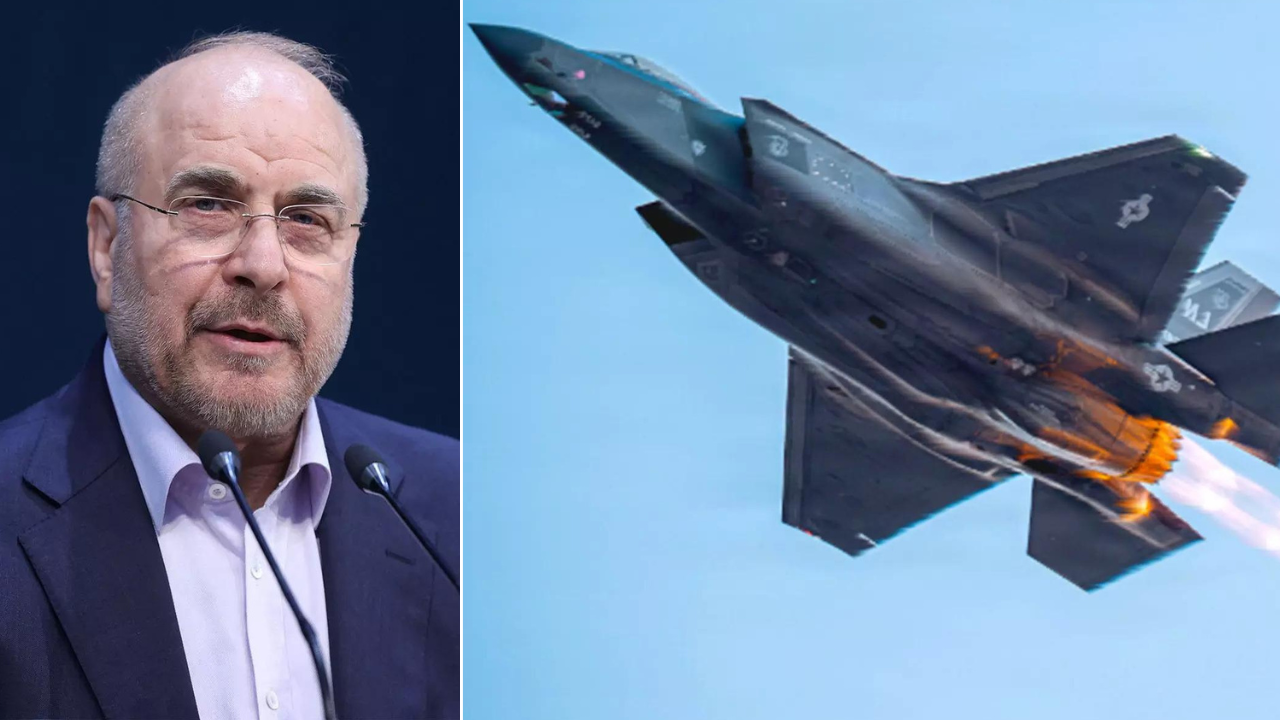
The cockpit of an F-35 Lightning II is less a seat and more a sensory immersion chamber. Inside, the pilot doesn’t just see the sky; they wear it. A $400,000 helmet projects a seamless, 360-degree view of the world, stitched together by cameras distributed across the jet’s skin. If the pilot looks down at their own boots, they don't see leather and flight suit. They see the clouds passing thousands of feet below the floorboards. It is the ultimate expression of human dominance over the physical realm—a machine that promises to make the pilot a god of the middle atmosphere.
But gods have a way of falling.
When an aircraft of this caliber—a platform costing roughly $100 million per unit—suffers a mishap or a mechanical failure, the ripple effect isn't just felt in a maintenance hangar or a balance sheet. It vibrates through the halls of power in Tehran, Moscow, and Beijing. For these observers, a scratched wing or a grounded fleet isn't a technical setback. It is a crack in the mirror of Western invincibility.
The recent rhetoric from Iran, labeling the F-35 a "monument to arrogance," isn't merely a piece of propaganda. It is a calculated strike at the psychological foundation of modern warfare. They aren't just mocking a jet; they are cheering for the collapse of a specific kind of world order that relies on the undisputed superiority of a single machine.
The Weight of the Invisible
Imagine a young maintenance officer standing on the deck of a carrier or the tarmac of a desert airbase. Their job is to keep this ghost in the air. To them, the F-35 isn't a political symbol; it’s a temperamental beast of logistics.
Every inch of the aircraft is covered in a specialized, radar-absorbent material that requires meticulous care. A single deep scratch can theoretically compromise its stealth profile, turning a "invisible" multi-role fighter into a very expensive target on a radar screen. This is the hidden tax of high technology. We have traded the rugged, "fix it with a wrench" reliability of the F-16 for a digital ecosystem so complex that a software bug can ground a squadron faster than an enemy missile ever could.
The Iranian critique hinges on this exact fragility. They see the F-35 as a metaphor for a superpower that has over-extended its imagination. To the critics, the jet represents a military-industrial complex that values complexity over utility, and prestige over practicality. When news breaks of a landing gear failure or a localized fire, the narrative shifted from "technical glitch" to "symbolic rot."
Is it arrogance to build the most advanced weapon in history? Perhaps. Or perhaps it is the inevitable trajectory of a nation that has decided that losing even one pilot is an unacceptable cost of doing business. We build these machines to be perfect because we no longer have the stomach for the messy, high-attrition wars of the twentieth century.
The Order of the Sky
For decades, the global order has been maintained by the silent threat of the "overmatch." The idea was simple: don't start a fight, because our technology is so far ahead that you won't even see the hand that hits you. This is the Pax Americana of the digital age.
When a competitor points at a damaged F-35 and calls it the "collapse of an order," they are testing a hypothesis. They are betting that the West has put too many eggs in one very shiny, very expensive basket. They believe that if you can prove the "invincible" jet is mortal, you can prove the system behind it is hollow.
Consider the perspective of a rival commander. For years, you have been told that your air defenses are useless against the Lightning II. You’ve watched the videos, read the spec sheets, and felt the mounting pressure of obsolescence. Then, a report surfaces: an F-35 has been sidelined by a cooling issue or a structural flaw.
The fear evaporates.
In its place comes a predatory curiosity. The "monument to arrogance" becomes a target of opportunity. This isn't just about the hardware; it’s about the aura. Warfare is 10% kinetic energy and 90% the stories we believe about our enemies. If the story of the F-35 changes from "unbeatable" to "unreliable," the geopolitical map begins to shift.
The Human Toll of Perfectionism
We often forget the people who actually sit in the seat. A pilot flying the F-35 is tasked with managing more data than any human being in history. They are not just aviators; they are systems managers, interpreting a flood of information filtered through AI and distributed sensors.
There is an immense psychological weight to being the operator of a "monument." If you crash a $20 million A-10 Warthog, it’s a bad day at the office. If you lose an F-35, you’ve lost a piece of national prestige. You’ve handed a victory to every propagandist from the Middle East to East Asia.
The "arrogance" Tehran speaks of is actually a form of extreme vulnerability. By striving for a machine that can do everything—stealth, strike, electronic warfare, intelligence gathering—the U.S. military created a single point of failure. If the F-35 fails to live up to its own mythos, there is no "Plan B" waiting in the wings. We have bet the house on the Lightning.
The critics aren't looking at the facts of the aircraft's kill-ratio in exercises, which remains staggering. They are looking at the friction. They are looking at the price tag. They are looking at the years of delays and the billions in cost overruns. To an adversary, these aren't just budgetary issues. They are symptoms of a giant that has forgotten how to be lean, how to be mean, and how to be pragmatic.
The Ghost in the Machine
We are currently witnessing a collision between two different philosophies of power.
One side believes in the "Aluminum Ghost"—the idea that technology can transcend the traditional risks of war. This side argues that the F-35, despite its hiccups, provides a level of situational awareness that makes it effectively untouchable in a real conflict. The cost and the complexity are simply the entrance fee for the future.
The other side, represented by the vocal critics in Iran and elsewhere, believes in the "Revenge of the Real." They argue that the world is too messy for a $400,000 helmet to solve. They believe that eventually, the sheer weight of the F-35’s own ambition will pull it out of the sky. They see the jet as a gilded cage—impressive to look at, but ultimately confining the power that built it.
There is a specific kind of silence that follows a military aviation mishap. It is the silence of engineers looking at telemetry and politicians looking at poll numbers. But in that silence, our rivals are whispering. They are telling a story where the American century ends not with a bang, but with a maintenance report.
Whether the F-35 is a triumph of engineering or a monument to hubris isn't a question that will be answered by a press release. It will be answered in the first sixty minutes of the next great conflict. Until then, every dent in the fuselage and every glitch in the code is more than just a mechanical problem. It is a data point in a global argument about who still owns the future.
The jet sits on the flight line, shimmering in the heat haze. It is a masterpiece of carbon fiber and lines of code. It looks like the future. It looks like a god. But as the sun sets, the shadows it casts are long, dark, and remarkably human.
The pilots climb in, the canopy closes with a pressurized hiss, and for a moment, the world waits to see if the ghost will rise or if the weight of its own legend is finally too much to carry.