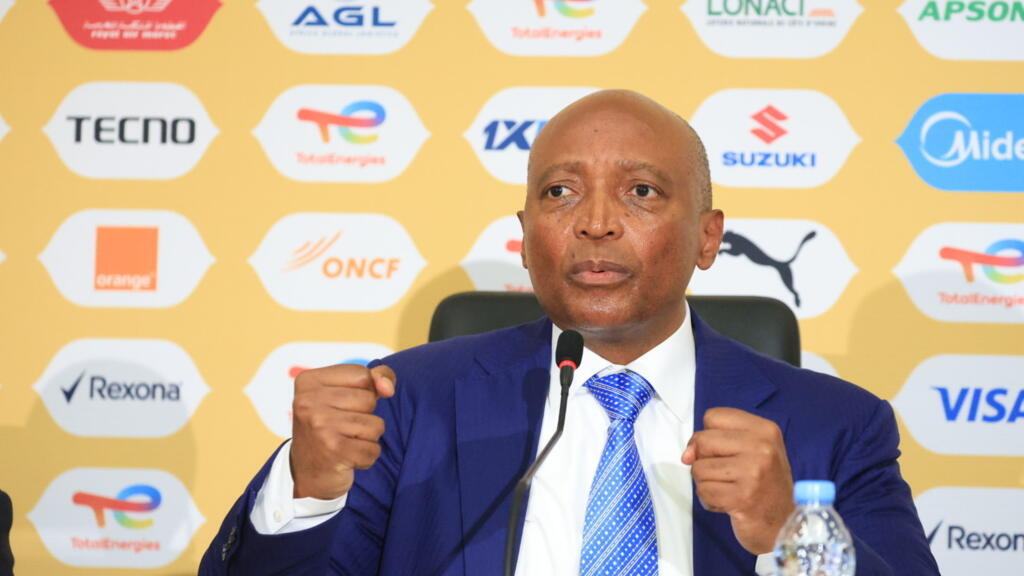
The Myth of the Gracious Reformer
Patrice Motsepe is "welcoming" a corruption probe. Stop for a second and look at the optics. It is the classic corporate deflection tactic: when the house is on fire, you invite the fire marshal over for tea and claim you’re the one who called the emergency line.
The mainstream narrative surrounding the Confederation of African Football (CAF) and the recent disputes in Senegal suggests that transparency is finally winning. They want you to believe that a billionaire president opening the books is a sign of a new era. It isn’t. In the world of high-stakes sports governance, welcoming a probe is often the most effective way to bury the truth under layers of bureaucratic "cooperation." You might also find this connected story interesting: How a Bosnian ball boy outsmarted Gianluigi Donnarumma and changed the game.
I have spent years watching sports entities burn through millions in legal fees just to reach a predetermined "clean" result. This isn't about clearing the air. It’s about managing the fallout of a power struggle that has very little to do with ethics and everything to do with who controls the commercial rights of African football.
The Senegal Dispute Is Not About Procedures
The dispute involving the Senegalese Football Federation (FSF) isn't a simple administrative hiccup or a minor disagreement over local governance. It is a symptom of a deeper, systemic rot that no "independent" probe will fix. As reported in latest reports by FOX Sports, the implications are worth noting.
When Motsepe publicly embraces an investigation, he is performing a sleight of hand. He shifts the conversation from the substance of the allegations—kickbacks, opaque bidding processes, and the suppression of member voices—to the process of investigating them. If you control the probe, you control the clock. If you control the clock, you can wait for the news cycle to die.
Here is the truth: CAF is currently a battleground for influence between established European interests and emerging Gulf money. Senegal, as a powerhouse on the pitch, is a massive piece on that chessboard. To frame this as a "corruption probe" is to treat a massive geopolitical power play like a petty theft case.
Why Probes Are the Best Friend of the Corrupt
People ask, "If there is something to hide, why would they allow an investigation?"
That is the wrong question. The right question is: "What can they hide within the investigation?"
- Scope Creep: By defining the terms of reference, CAF leadership ensures the investigators look into the "missing" $50,000 while ignoring the $50 million contract signed behind closed doors in a hotel suite in Cairo or Paris.
- Selected Cooperation: Documents are "lost" during transitions. Encrypted messages are unrecoverable. Witness statements are sanitized by legal teams before they ever reach the probe’s desk.
- The "Lone Wolf" Fallacy: Every probe eventually finds one mid-level staffer to throw under the bus. They get the lifetime ban, the organization gets a "clean bill of health," and the system continues exactly as before.
I’ve seen this play out in FIFA, in the IOC, and in dozens of national federations. The "independent" investigator is often a firm that hopes to land a multi-year compliance contract with the very organization they are investigating. The conflict of interest is baked into the cake.
Follow the Commercial Rights, Not the Moral Grandstanding
The real tension in African football isn't about whether a few officials took a bribe. It’s about the African Super League and the centralization of television rights.
For decades, national federations held significant leverage. Motsepe’s administration is moving toward a model where power—and cash—is concentrated at the top. The Senegal dispute is a pushback against this centralization. When a federation like Senegal’s starts making noise, the easiest way to silence them is to wrap them in a corruption probe that forces everyone to play by CAF’s rules.
If Motsepe actually wanted to fix the system, he wouldn't be "welcoming" external probes. He would be implementing a real-time, blockchain-based ledger for every dollar that enters and exits CAF headquarters. He would be making every commercial contract public the moment it is signed. He isn't doing that. He is using the language of 21st-century accountability to mask 20th-century patronage.
The Failure of the "Billionaire Savior" Logic
There was a hope that Motsepe, given his vast personal wealth, would be immune to the petty greasing of palms that defined the Hayatou or Ahmad eras.
This was a naive assumption.
Wealth doesn't eliminate the desire for power; it merely changes the currency. The current administration isn't looking for a few thousand dollars in an envelope. They are looking for the prestige of "modernizing" African football on the world stage, often at the expense of the grassroots development that the continent actually needs.
The "billionaire savior" doesn't need your money, but he does need your compliance. A probe is a magnificent tool for enforcing that compliance. It says to every other federation: "Look how transparent we are. If you cross us, we will find a reason to investigate you, too."
Stop Asking if They Are Guilty
The mainstream media loves the "guilty or innocent" binary. It makes for easy headlines. But in the corridors of CAF, that distinction is irrelevant.
Everyone is "guilty" of something because the rules are designed to be impossible to follow perfectly. This creates a permanent state of vulnerability for every official. If you stay in line, the rules are relaxed. If you speak out—like we are seeing with the friction in Senegal—the rules are suddenly enforced with "unwavering integrity."
This probe is a weapon. It is being used to settle scores under the guise of cleaning up the game.
The Uncomfortable Reality of Reform
Real reform in African football would look like a disaster for the current leadership. It would involve:
- Decentralizing power: Giving small federations an equal seat at the table, not just those with the biggest stadiums.
- Total Financial Transparency: Every flight, every hotel stay, every consultant fee published in a searchable database.
- Term Limits with Teeth: Not the kind that can be voted away by a hand-picked assembly.
Don’t expect any of that to come out of this probe. Expect a 200-page report that uses a lot of words to say very little, a few recommendations for "improved internal controls," and a press release from Motsepe claiming victory for the "New CAF."
The "lazy consensus" says this investigation is progress. The reality is that it is a pressure valve designed to let just enough steam out of the system so the boiler doesn't explode.
If you want to know what’s really happening in African football, stop reading the official statements about corruption probes and start looking at who is winning the contracts for the next decade of broadcast rights. That is where the bodies are buried. The rest is just theater for the fans.
African football doesn't need another probe. It needs a total demolition of the governance structure that makes these probes necessary in the first place. Until the fans and the member associations stop falling for the "transparency" trap, the cycle of dispute and "investigation" will simply repeat every four years.
Motsepe isn't welcoming a probe; he’s hosting a funeral for the truth.