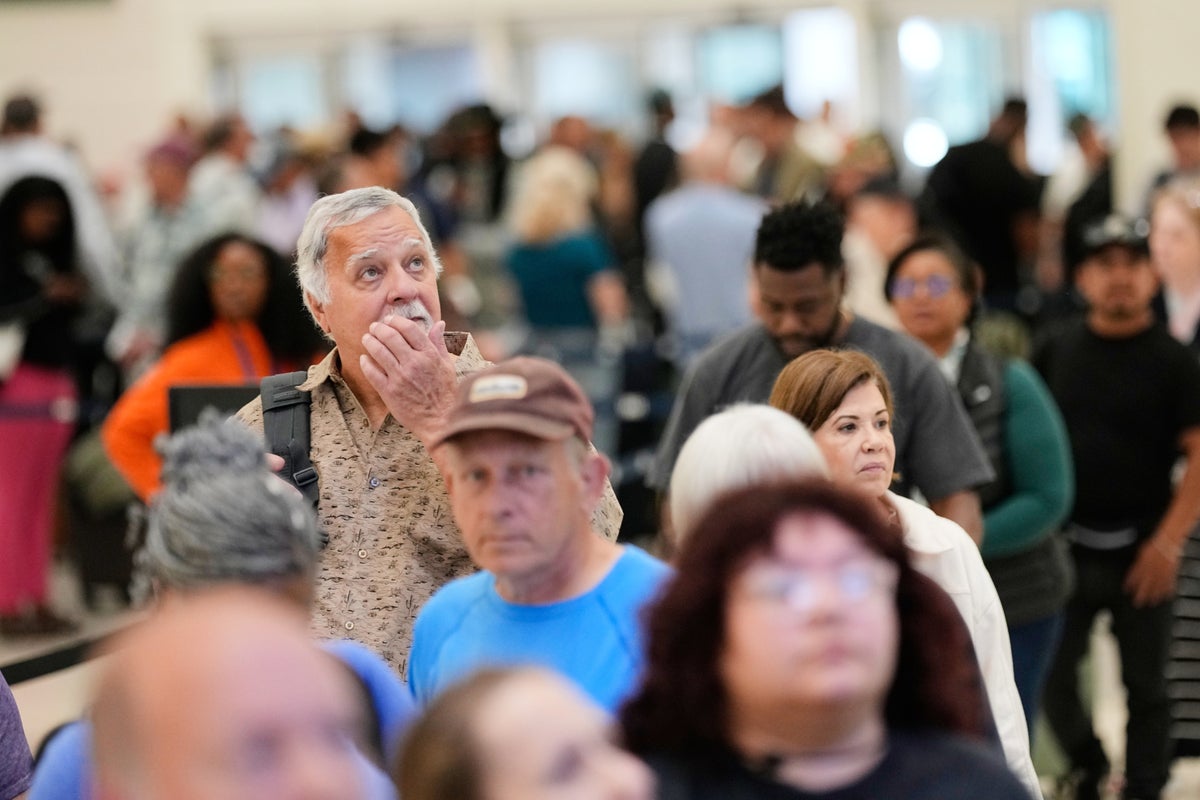
The headlines are screaming. You’ve seen the photos of lines snaking through parking garages at Hartsfield-Jackson and the frantic tweets from travelers missing weddings. The narrative is predictably lazy: a government shutdown has crippled the TSA, passenger wait times are at "record highs," and we are one week away from total aviation collapse.
They are lying to you. Or, more accurately, they are looking at the wrong set of metrics because they’re terrified of what the right ones reveal.
The current "crisis" isn't a failure of the system. It’s a stress test that has finally exposed the bloated, inefficient security theater we’ve been subsidizing since 2001. If you think the solution is simply "reaching a deal" and going back to the way things were on day 39, you’ve already lost. The shutdown hasn't broken the airport; it has revealed that the airport was already broken.
The Myth of the Efficient Wait Time
Every major news outlet is obsessed with the "record-high wait time." They treat it like a scoreboard. 90 minutes in Miami? Disaster. Two hours in Newark? Catastrophe.
Here is the truth: A wait time is a symptom, not the disease. For two decades, the TSA has operated on a philosophy of "infinite throughput through infinite staffing." When you have a labor pool that you can simply throw at a problem, you never actually have to innovate. You don’t have to fix the ergonomics of the bin system. You don’t have to optimize the facial recognition software. You just add another lane and hire more bodies.
Now, those bodies aren't showing up because they aren't getting paid. Good.
This labor shortage is forcing a brutal, necessary audit of how we move humans through space. I’ve consulted for logistics firms that move millions of tons of freight; if they operated with the 14% false-alarm rate and the erratic staffing models of a standard Tier-1 airport, they’d be bankrupt in a fiscal quarter. The shutdown is the first time in 20 years the aviation industry has been forced to confront its reliance on low-skill manual labor instead of high-efficiency automated systems.
Security Theater is Closing Early
The "lazy consensus" says that fewer TSA agents equals less safety. This is a fundamental misunderstanding of how risk mitigation works.
In 2015, an internal investigation by the Department of Homeland Security found that undercover agents were able to smuggle mock explosives and weapons past TSA checkpoints in 95% of trials. That wasn't during a shutdown. That was during "peak efficiency" with full staffing.
We have spent billions on a system designed to make you feel safe while you take off your shoes, yet it fails the most basic penetration tests. The shutdown has stripped away the costumes. When the lines get long, the "efficiency" measures—like moving people to PreCheck lanes who haven't been vetted—prove that the "strict" rules were always flexible based on political optics, not actual threats.
If the system can’t handle a 10% reduction in staff without the entire national infrastructure seizing up, the system is a fragile relic. True security isn't a wall of people in blue shirts; it’s a decentralized, data-driven approach that identifies threats before they ever reach the terminal.
The Travelers Are the Problem
Nobody wants to hear this, but the "innocent traveler" is a major contributor to the friction. We’ve been coddled. We arrive at the airport expecting a seamless experience while carrying oversized "personal items" that should have been checked and failing to follow instructions that have been in place for twenty years.
The shutdown is a harsh but fair teacher. It is re-introducing the concept of Accountability in Transit.
- The 3-Hour Rule is Dead: If you arrive three hours early now, you’re part of the problem. You are contributing to the "peak load" of the terminal.
- The Carry-On Era Must End: The bottleneck isn't just the metal detector; it's the four minutes you spend trying to jam a hardshell suitcase into a space meant for a briefcase.
- Privatization is the Only Exit: Look at San Francisco International (SFO). They use private screening contractors under the Screening Partnership Program (SPP). They aren't seeing the same catastrophic meltdowns as government-run hubs. Why? Because a private company has a contractual obligation to perform, or they lose the deal. The federal government has a monopoly on failure.
Stop Asking for a "Deal" and Start Asking for a Reset
The "People Also Ask" sections on Google are filled with variations of "When will the shutdown end?" or "Is it safe to fly during the shutdown?"
These are the wrong questions. The right question is: "Why does our ability to travel across state lines depend on a budget dispute over a border three thousand miles away?"
We shouldn't be rooting for a return to the status quo. The status quo was a $7 billion annual budget for an agency that has never caught a terrorist at a checkpoint. We should be demanding a total decoupling of airport security from the federal discretionary budget.
Imagine a scenario where airport security was funded entirely by a per-passenger fee that stayed within the airport of origin. No more "shutdowns." No more "unpaid agents." Just a direct service-for-fee model. If the lines get too long, the airport loses money because people stop flying there. Incentives would finally align with outcomes.
The Brutal Reality of the 40th Day
We are at day 40. The "industry experts" are predicting a total walk-off. They say the air traffic controllers are next.
Let them walk.
Not because we don't need them—we do—but because we need to see exactly how much of the current aviation "rulebook" is actually necessary for safety and how much is just bureaucratic barnacles. When the controllers at the Canadian border started sending pizzas to their American counterparts, it was a nice gesture. But the real story was that the planes were still landing. The sky didn't fall.
We are finding the "Minimum Viable Product" of flight.
If you are a traveler, stop complaining about the wait. You are witnessing the death rattles of a 20th-century model. The friction you’re experiencing is the sound of a system being forced to modernize against its will.
How to Navigate the New Normal (That Nobody Admits is Here)
Stop looking for "hacks." There are no hacks when the system is undergoing a systemic reset. There is only strategy.
- Fly Out of Secondary Hubs: While everyone is stuck in the 4-hour nightmare at O’Hare, Midway is moving. Smaller airports with private contractors are the only "safe" bet right now.
- Ship Your Bags: If you are still trying to bring a bag through a TSA checkpoint during a labor crisis, you deserve the 90-minute wait. Use a courier service. Get your luggage delivered to your hotel. Reduce your "security footprint" to your phone and your wallet.
- Demand a Refund, Not an Apology: Start filing Department of Transportation complaints for "unreasonable delays" caused by infrastructure failure. The only way the airlines will pressure the government to fix this permanently—rather than just patching it—is when it hits their bottom line.
The shutdown isn't an "inconvenience." It’s an intervention. For forty days, we’ve been forced to look at the bloated, inefficient, and fragile nature of American travel.
If we go back to "normal" after this, we’ve failed the test. The goal shouldn't be to get the TSA back to work; the goal should be to make the TSA as we know it obsolete.
Pack light. Arrive late. Demand better.


