The global denim market in 2026 has decoupled from the rapid cycle of disposable silhouettes, shifting instead toward a value-retention model driven by textile engineering and supply chain transparency. High-performance denim is no longer defined by brand prestige but by the optimization of three specific variables: fiber tensile strength, dye-fixation stability, and the mechanical lifecycle of the weave. Consumers are increasingly treating denim as a capital expenditure rather than a recurring operational expense. Selecting the best denim requires a structural audit of these variables to ensure that the garment survives the transition from a "new" aesthetic to a "patina" state without structural failure.
The Tri-Component Framework of Premium Denim
To evaluate denim in 2026, one must move past the binary of "stretch vs. rigid." The market now functions on a tri-component framework that determines the garment’s utility and longevity. You might also find this similar story useful: How to Fix Your Boring Shower and Actually Enjoy Your Mornings.
- Fiber Composition and Kinetic Recovery: The primary failure point in modern denim is "bagging out"—the permanent deformation of the fabric at high-stress points like the knees and seat. Superior denim utilizes a core-spun yarn where a high-tenacity elastomer is wrapped in long-staple organic cotton. This provides the tactile feel of traditional 100% cotton while maintaining a recovery rate of 98% or higher after 500 flexion cycles.
- Indigo Saturation and Molecular Bonding: Traditional vat dyeing often results in superficial color layers that slough off during initial washes. The 2026 standard involves electrochemical dyeing processes that ensure deeper penetration of the indigo molecule into the fiber core. This reduces "bleeding" onto secondary surfaces while allowing for a more controlled, high-contrast fade over time.
- Ounce-Weight Calibration: The weight of denim (measured in ounces per square yard) dictates its thermal regulation and abrasion resistance.
- Lightweight (8oz–10oz): Optimized for high-humidity environments but prone to frictional thinning.
- Mid-weight (11oz–14oz): The industry equilibrium point, offering the best ratio of break-in time to durability.
- Heavyweight (15oz+): Designed for maximum structural integrity and high-contrast creasing, though at the cost of initial mobility and breathability.
Decoding the 2026 Silhouette Hierarchy
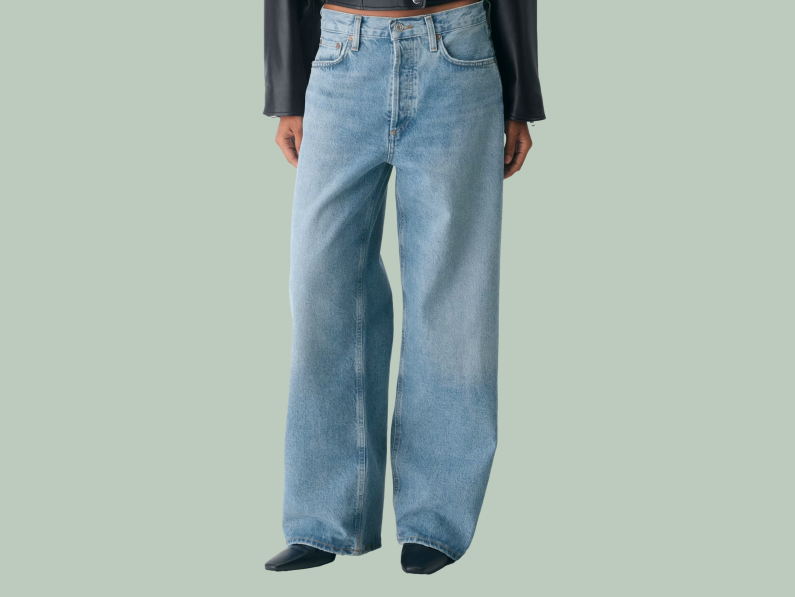
The aesthetic shift of 2026 is a reaction to the oversaturation of extreme wide-leg and ultra-skinny cuts. We are seeing a regression toward the "Anatomical Straight" cut. This silhouette follows the natural lateral line of the leg without adhering to the musculature, creating a visual verticality that maximizes the fabric's drape.
The Straight Leg Optimization
The straight leg is the safest investment for 2026 because it minimizes mechanical stress on the side seams. Unlike tapered fits, which pull tension across the thigh and calf, the straight cut distributes tension evenly. When shopping, the critical measurement is the knee-to-hem ratio. A true straight leg maintains a variance of less than 0.5 inches between the knee width and the leg opening. As discussed in recent reports by Glamour, the implications are widespread.
The Relaxed Tapered Variance
For those with higher muscle mass in the quadriceps, the relaxed taper serves as a functional necessity rather than a stylistic choice. The engineering challenge here is the "rise"—the distance from the crotch seam to the waistband. A longer rise prevents the fabric from pulling tight across the hips, which is the leading cause of premature crotch blowouts in denim.
The Technical Reality of Sustainable Production
Sustainability in 2026 is no longer a marketing claim; it is a regulatory requirement in many jurisdictions. However, the efficacy of these methods varies.
Laser Distressing vs. Chemical Stone Washing
Traditional stone washing relies on massive water consumption and abrasive pumice stones that weaken the cotton fibers. Laser distressing, while more expensive, uses concentrated light to ablate the top layer of indigo without touching the structural integrity of the yarn. This results in a "vintage" look that retains 100% of the original fabric strength.
Circular Denim and Recycled Content
There is a fundamental trade-off in recycled denim. Post-consumer recycled (PCR) cotton has shorter fiber lengths than virgin cotton. This reduces the overall tensile strength of the fabric. To compensate, 2026's top-tier manufacturers blend PCR cotton with high-strength hemp or Tencel. These bast fibers provide the structural scaffolding that recycled cotton lacks, creating a garment that is both ecologically responsible and mechanically sound.
Procurement Strategy: Analyzing the Spec Sheet
When evaluating a specific pair of jeans, the marketing copy is often noise. The following technical specifications serve as the true indicators of quality.
Hardware and Construction Points
- Hidden Rivets: Check the back pockets. Hidden rivets—reinforcements tucked under the fabric—prevent the metal from scratching furniture while ensuring the pocket does not tear away under load.
- Chain-Stitched Hems: This traditional sewing method creates a "roping" effect at the hem as it shrinks and fades. While purely aesthetic, it indicates the use of vintage Union Special machinery, which is a proxy for a manufacturer's commitment to slow-production quality.
- Felled Seams: A flat-felled seam hides all raw edges of the fabric inside a fold. This prevents fraying and provides a much higher burst strength than a standard overlock stitch.
The Selvedge Premium
Selvedge denim (from "self-edge") is woven on narrow shuttle looms. While not inherently "better" than projectile-loomed denim, it represents a slower, more controlled weaving process that results in a tighter grain and more natural irregularities. In 2026, the presence of a clean, non-fraying edge on the outseam is a signal of a low-tension weave that will conform to the wearer's body more effectively than mass-produced fabrics.
Maintenance as a Function of Longevity
The myth of "never washing your jeans" has been debunked by textile science. Dirt, skin oils, and sweat act as abrasives. If left in the fabric, they grind against the cotton fibers, leading to premature breakage.
The Optimized Wash Cycle:
- Frequency: Every 10 to 20 wears, or when the fabric feels "limp."
- Temperature: Cold water only. High heat causes the elastomer (if present) to snap, leading to permanent loss of shape.
- Detergent: Use a pH-neutral liquid detergent. Avoid powders, which can act as a physical abrasive against the indigo.
- Drying: Never use a mechanical dryer. Air drying in a shaded area prevents UV-induced oxidation of the indigo and protects the fiber elasticity.
Market Projections and Economic Value
The "cost per wear" (CPW) metric is the ultimate decider of value in 2026. A pair of $300 engineered denim jeans that lasts for 1,000 wears ($0.30 CPW) is objectively superior to a $60 pair that loses its shape and structural integrity after 50 wears ($1.20 CPW).
The market is moving toward a bifurcation: hyper-cheap, short-lifecycle denim for the trend-driven consumer, and high-spec, heritage-engineered denim for the value-driven analyst. The latter category is where the most significant innovations in 2026 are occurring, particularly in the realm of "smart denim" treated with antimicrobial finishes that extend the time required between washes without sacrificing hygiene.
The bottleneck for the consumer remains the lack of standardized "durability ratings" on tags. Until such regulations are widespread, the burden of analysis remains with the buyer. One must look for the density of the weave, the quality of the hardware, and the provenance of the raw cotton. Denim is not a garment; it is a biological and mechanical record of the wearer’s movements.
To optimize a wardrobe for the remainder of 2026, liquidate "fast-fashion" denim that contains more than 5% synthetic fiber, as these will suffer from irreversible elastic failure within 18 months. Reallocate that capital into 100% cotton or low-stretch (1-2%) selvedge options from Japanese or American mills. These garments are the only ones that will appreciate in aesthetic value as they age, effectively turning a clothing purchase into a durable asset.